
September 22, 2026
Tube Size and Wall Spec for Trolley Frames | Doing Metal
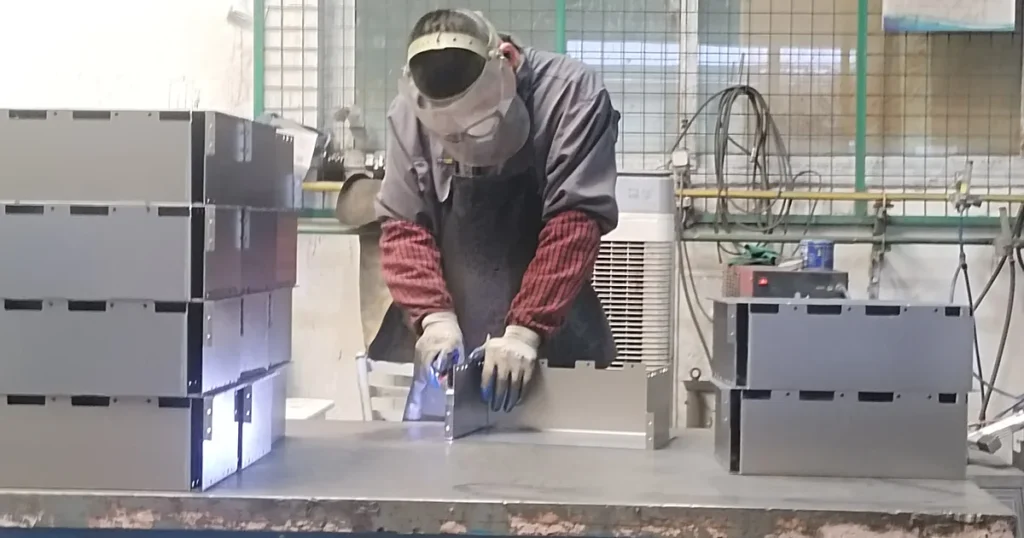
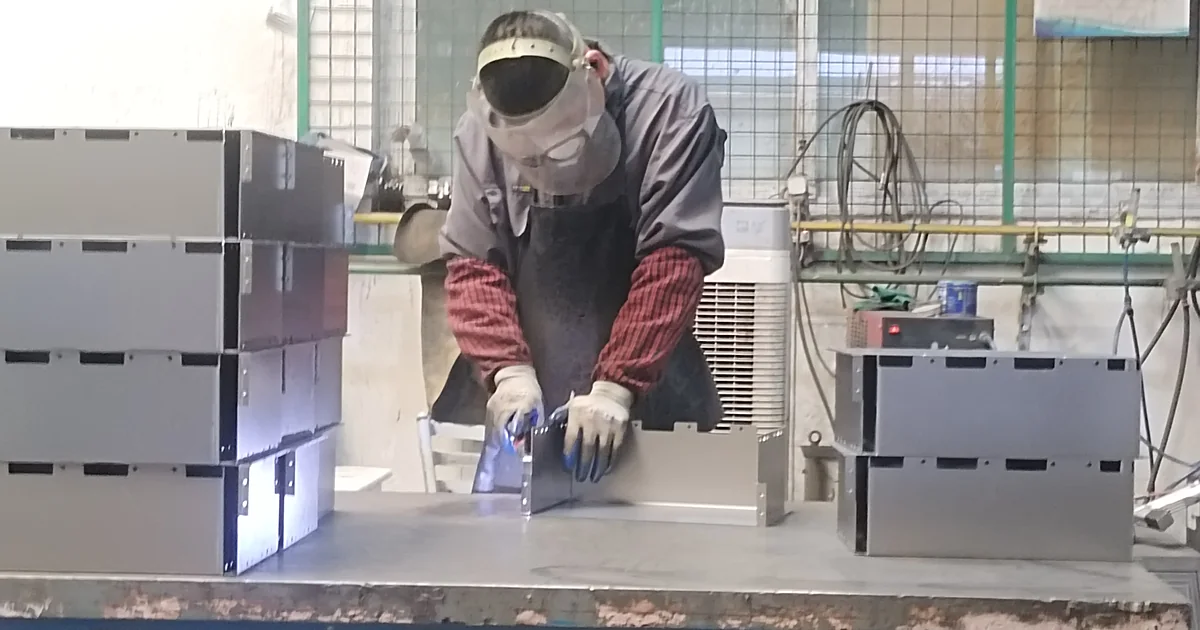
Almost every cart that comes back early from service failed in a predictable place: a bent tube, a cracked weld next to a caster plate, or a flat frame that no longer rolls straight. The cause is rarely “not enough steel” overall – it is usually steel in the wrong shape. Section diameter and wall thickness do very different jobs, and understanding which does what is the quickest way to specify a frame that lasts.
Diameter resists bending; wall thickness resists local damage
A tube’s resistance to bending increases very quickly with diameter, because material further from the centre does more work. Doubling the wall thickness helps, but a modest increase in diameter often helps far more for the same weight. That is why long spans get bigger tubes rather than thicker ones.
Wall thickness, meanwhile, decides how the tube behaves locally: whether a caster bolt crushes it over time, whether a clamp or bolt-on accessory pulls through, and how well it survives the knocks of daily industrial use. Thin walls on a large diameter tube look strong and still fail at the fixing points.
What our projects typically use
Trolley and cart builds we handle generally fall in this range, chosen per project rather than copied from a catalogue:
- Frame tubes: roughly 20 to 50 mm outside diameter
- Wall thickness: roughly 1.2 to 3.0 mm depending on span, load and impact
- Deck and shelf plate: roughly 0.8 to 3.0 mm
- Caster diameters: roughly 75 to 200 mm
Two carts with the same load rating can sit at opposite ends of those ranges because of how they are loaded. A pallet sitting flat on a deck is kind to a frame; a stack of castings landing on four feet is not.
The four questions that fix the specification
1. Where is the load, and how long is the span?
Self-weight plus the load’s contact points determine whether the frame needs stiffening ribs, cross members or simply a larger tube. Long unsupported spans are the usual culprit behind shelves that bow permanently.
2. How much impact should it survive?
Loaded once an hour by hand is a different design problem from being dropped onto kerbs daily or knocked along a dock. Impact drives wall thickness and joint design more than static load does.
3. What is bolted or welded to the frame?
Heavier fittings – handles, tow eyes, drawer slides, caster plates – need enough wall to hold a thread or take a bolt load. Tell us what attaches where; thicker sections at those points are cheaper than field failures.
4. Does the cart have a weight limit itself?
Wheelchair ramps, mezzanine lifts and manual pushing all impose practical weight ceilings. Optimising section shape gets stiffness into the frame without adding kilograms the operator has to push.
Tube versus sheet versus folded section
Round or square tube suits most frames: good stiffness in every direction and clean welds. Folded sheet sections suit long, flat panels and enclosures, while machined or laser-cut plates serve bracket-heavy designs. Hybrids are normal – a welded tube frame with folded panels and laser-cut gussets is often the strongest answer at the lowest cost.
Where frames actually fail
- At the caster mounts. Thin mounting plates and short tube walls tear before the rest of the cart moves.
- At heat-affected zones next to poorly executed welds – a joint design problem, not a thickness problem.
- At handle-to-frame joints, which take the entire pushing force through a short lever.
- At unsupported shelf spans that were never checked for deflection at full load.
All four are reviewed during engineering before quoting, which is why we ask for the load distribution rather than just the number.
Reading a tube specification on a drawing
A complete tube callout has three parts: outside diameter, wall thickness and material. “25 x 1.5 mm steel tube” tells you the shape and how thick it is, but not the grade. Adding the material – for example cold-rolled steel, stainless 304 or aluminium – removes the last significant ambiguity.
When drawings are reviewed before production, four practical things are checked:
- Dimensions that can actually be welded with the tooling available
- Wall thickness adequate wherever a bolt, clamp or caster plate loads the tube
- Bend radii that suit the intended material and available press brake tooling
- Tolerance callouts only where they matter, because blanket tight tolerances raise cost without improving function
Weight, stiffness and the person pushing
Material added to a cart is material the operator pushes along the route every day. Optimising section shape rather than simply adding steel keeps the cart stiff without turning it into a gym session. In practice that means increasing tube diameter where spans are long, adding cross members at load points, and resisting the temptation to thicken every member. A cart that is stiff, square and light enough to start comfortably will outlast a heavier cart that nobody wants to move.
Frequently asked questions
Should I just ask for the thickest wall available?
No. Over-specifying adds weight, pushing effort and cost without addressing the real failure mode, which is usually an unsupported span or a weak fixing point. Tell us the load and we will place material where it does work.
Can existing drawings be reviewed before production?
Yes. Send the drawing and we will flag changes that improve manufacturability, weld access or deflection behaviour before anything is cut.
Do you build in aluminium as well as steel?
Yes, steel, stainless steel and aluminium are all worked in-house, selected by load, environment and weight targets.
Have a drawing but unsure about the section? Send it through the RFQ form and we will review it before quoting.
Have a Similar Trolley Project? Send It for Review
Send your trolley type, load capacity, size, wheel requirement, quantity, and drawings or reference photos. Our team will review the structure and reply within 24 hours on business days.
Urgent project? Email gao@doingmetal.com or WhatsApp +86 18158549983.