
September 22, 2026
Handle Height and Push Force: Ergonomics for Carts | Doing Metal
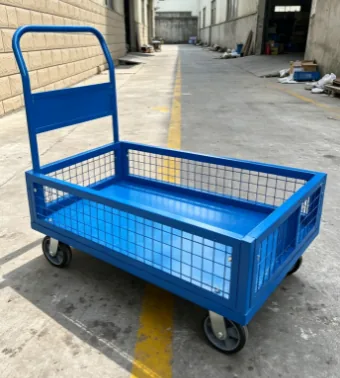
Handle geometry is the cheapest thing to get right on a drawing and one of the most expensive to change afterwards, because it is welded into everything else. Get it wrong and operators push harder than they should, every trip, for years. Get it right and nobody notices – which is exactly how good cart ergonomics feel.
Why height matters more than the number itself
Handle height determines the angle of force an operator delivers into the cart. Too low and they lean into it, loading their back and lifting the front casters unhelpfully. Too high and they push upwards, wasting effort and reducing steering control. The useful range for most adult operators sits roughly between hip and lower chest, and should be set around the specific heights of the people who will use the cart – not around an average.
Practical implications:
- For a cart used by one known team, ask them.
- For a cart used across many shifts and body sizes, use a mid-range height and consider a second lower handle position.
- For long routes, favour the higher end of the range; the mechanical advantage matters more than reach for one-off moves.
Handle type and what each costs you
- Fixed loop or straight handles are the stiffest and cheapest, Excellent for heavy starting loads, but they add length to the cart and affect aisle turning.
- Removable or bolt-on handles cut ship volume significantly on large orders and are easy to replace after damage.
- Folding handles suit storage-sensitive designs and nested return logistics, at the cost of a small amount of stiffness.
- Double-ended handles suit routes where the cart is pushed from either end without turning around.
- Tow arrangements – tow bar or coupling arm – suit trains of carts, and must be specified before the frame is finalised because they change the load path.
What actually determines push force
Buyers often assume weight is the dominant factor. In practice, on level floors, wheel behaviour usually dominates:
- Wheel diameter: the single biggest lever. Bigger wheels cross joints, gaps and debris instead of stopping at them.
- Tread material: harder treads roll more easily on smooth floors; softer treads absorb vibration and protect floors but demand more starting effort.
- Bearing quality: the quietest specification difference and one of the largest contributors to rolling resistance.
- Caster layout: two fixed plus two swivel tracks straight and predicts well; four swivel turns tightly but wanders on long pushes.
- Floor condition: cracks and debris multiply every other factor. See our caster selection guide.
A heavy cart on the right wheels can be easier to start than a light cart on poor ones. This is why we ask about the floor before recommending a specification.
Specifying ergonomics on your drawing
Add these to any custom cart RFQ and most ergonomic problems disappear before production:
- Handle height measured from the floor to the grip centre, plus acceptable tolerance
- Handle type and whether it must be removable, folding or double-ended
- The heights and reach expectations of actual operators, or the population you are designing for
- Maximum single-operator push distance and whether routes include ramps
- Longest route and worst floor condition
- Whether the loaded cart ever has to be stopped on a slope, which drives brake specification
Brake reach and parking ergonomics
A brake that cannot be reached once the cart is loaded is decoration. Test three things on any sample:
- Reach with cargo. Can an operator get a foot or hand to it with a full load on board
- Holding on the worst slope. Including dock ramps and any parking area that is not perfectly level
- Release under load. A brake that holds but will not release safely is worse than no brake at all
Total-lock brakes cost more than wheel-only brakes and are worth specifying wherever operators work at a parked cart, such as maintenance benches or picking stops.
Noise, vibration and floor protection
Noise complaints usually arrive from environments nobody considered at drawing stage: libraries, hospitals, night-shift warehouses, broadcast studios. Hard treads are quiet on smooth sealed floors and harsh everywhere else, while soft treads protect floors and reduce vibration but increase starting effort. If quiet operation matters, say so early, because it changes wheel specification and sometimes the frame needed to accept larger, softer wheels.
Frequently asked questions
What height should a platform trolley handle use?
There is no single correct figure, because it depends on operator height, load height and route length. Give us the operator context and we will propose a height on the drawing for you to confirm.
Can the handle be adjustable?
Possible, though it adds cost and usually loses stiffness compared with a welded position. Multiple fixed positions are often a better compromise.
Our operators complain the cart is hard to start loaded.
Usually a wheel specification issue rather than a strength one. Larger diameter, harder tread or better bearings typically reduce starting effort more than any other change – send us the floor condition and we will propose options.
Send your route details and operator context through the RFQ form and we will review the handle and caster specification together.
Have a Similar Trolley Project? Send It for Review
Send your trolley type, load capacity, size, wheel requirement, quantity, and drawings or reference photos. Our team will review the structure and reply within 24 hours on business days.
Urgent project? Email gao@doingmetal.com or WhatsApp +86 18158549983.