
September 22, 2026
Trolley Maintenance and Spare Parts Guide | Doing Metal
A cart that lasts five years and a cart that lasts eighteen months are often the same design maintained differently. Industrial trolleys do not usually fail catastrophically; they degrade until operators stop using them. A short maintenance routine and a small spares stock cost very little and change that outcome.
What wears out first
Wheels and bearings
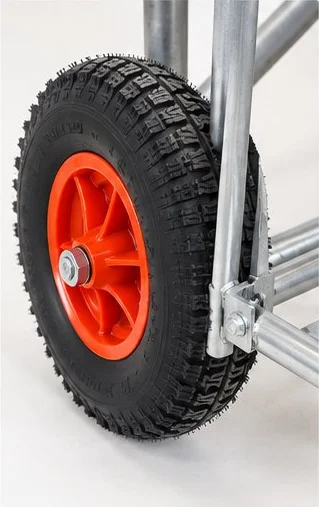
The fastest wearing parts on any cart. Flat spots from locked wheels dragging, debris embedded in soft tread, bearings that have lost lubrication, and swivel races that have gone loose all show up as harder pushing and wandering. Replace wheels in sets on a cart rather than one at a time, or the cart will pull to one side.
Brakes
Pedal mechanisms get bent, pads wear, and adjustment drifts. A brake that needs a hard stamp to engage will eventually not be used. Check engagement and release under load, not empty.
Fasteners
Bolted joints loosen, especially on knock-down designs and on carts that run over rough floors. Re-torque on a schedule, and use locking hardware where the joint matters. See knock-down carts for joint considerations.
Finish
Chipped coating is where rust starts. Touch up early with a compatible paint rather than waiting for the annual shutdown. On outdoor or wash-down routes, inspect edges and welds where coating is thinnest.
Handles and grab points
The parts operators touch are the parts that get damaged. Bent handles and torn grips are also the most common reason a cart gets retired early, even when the frame is sound.
A realistic inspection schedule
- Weekly, by the operator: pushing effort, unusual noise, obvious damage, brake engagement. Thirty seconds while walking past.
- Monthly, by a supervisor or technician: wheel condition, swivel play, brake function under load, loose fasteners, visible coating damage.
- Quarterly: torque check on bolted joints, caster mounting inspection, frame check for cracks at load points, deck or shelf deflection check.
- Annually: review the fleet, retire or refurbish carts beyond economical repair, and review which failures repeat – those belong on the next drawing.
Spare parts to order with the first shipment
Spares cost almost nothing inside a container that is already shipping, and a great deal when air freighted later. Worth including:
- Complete caster assemblies, typically five to ten percent of the wheel count
- Brake modules or pads appropriate to the brake type
- Handles and grips, and their fasteners
- Bolt kits for every joint on the cart, including a few spares of each size
- Replacement shelves, trays or dividers if they take damage in service
- Touch-up paint matched to the original finish
Ask for spares to be quoted as separate line items so they can be reordered by part number rather than described by email.
Designing for maintainability
Maintenance is cheaper if the drawing considered it:
- Use common caster sizes across the fleet so one spare fits many carts
- Bolt casters rather than weld them where replacement is likely
- Keep brake pedals accessible and protected from impact
- Avoid proprietary fasteners that need special tools
- Label carts with an asset number that ties to the drawing and parts list
- Standardise finish colours so touch-up stock covers the whole fleet
These are small drawing decisions that determine whether maintenance happens at all.
Cleaning and wash-down routines
Cleaning method drives both material and maintenance:
- Wipe-down with mild detergent suits most powder-coated carts
- Pressure washing forces water into bearings and joints, so sealed bearings and drainage details matter
- Aggressive sanitisers dictate stainless hardware, or the hardware becomes the first rust point
- Whatever the method, dry the cart afterwards and inspect wheel bearings more often on wash-down routes
Describe the cleaning method during RFQ. It changes the finish, the bearings and the service interval.
Record keeping and fleet audits
A fleet without records is a fleet replaced on guesswork. Minimum useful record per cart: asset number, drawing reference, purchase date, caster model, brake model and intervention history. Review annually and you will usually find one failure mode that dominates – and that belongs on the next drawing rather than in next year’s maintenance budget.
Frequently asked questions
How long should an industrial cart last?
With reasonable maintenance, the frame should outlast several sets of wheels. Wheel and brake life depends on floor condition and duty cycle more than on the cart itself.
Should we repair or replace a worn cart?
If the frame is square, the welds are sound and the coating is serviceable, replacing wheels, brakes and handles usually costs a fraction of a new cart. If the frame is bent or cracked, replace.
Can we get spares years later?
That is easier if the specification is held on a drawing with part numbers. Standardising caster models across your fleet is the single best insurance for long-term serviceability.
Ask for a spares line item with your next RFQ through the contact page – it is cheapest in the first container.
Have a Similar Trolley Project? Send It for Review
Send your trolley type, load capacity, size, wheel requirement, quantity, and drawings or reference photos. Our team will review the structure and reply within 24 hours on business days.
Urgent project? Email gao@doingmetal.com or WhatsApp +86 18158549983.