
November 6, 2026
Cantilever Trolley for Window Frame Storage
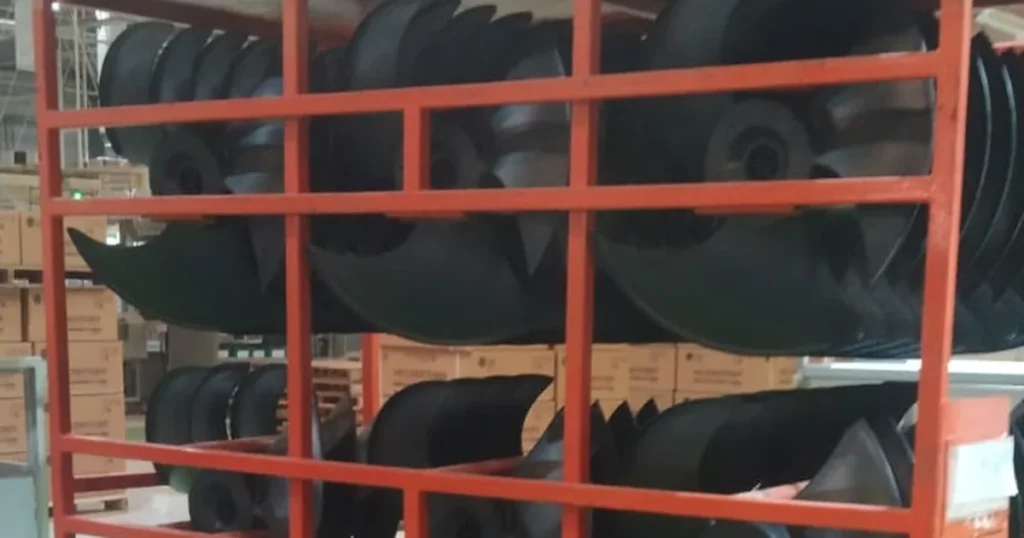
A window and door fabricator in Western Europe asked us for a mobile trolley that could hold a stack of long aluminium window frames upright, roll them between cutting, glazing and dispatch, and do it without bending or scratching the profiles. A flat shelf trolley would have worked for short parts, but frames up to roughly two metres long need arms they can hang from, not a surface they lie on. That is what a cantilever trolley is for: two columns, a row of horizontal arms on each side, and a base that keeps the whole thing stable when loaded unevenly.
- Load range we build to: 80–1,000 kg per trolley, sized to the real product and cradle geometry.
- Framing: round or square tube from Ø20–50 mm with 1.2–3.0 mm wall; shelf and panel plate 0.8–3.0 mm.
- Casters: 75–200 mm in PU, rubber, nylon or pneumatic, matched to floor type, load and noise limits.
- Finish and terms: powder-coat film 60–80 µm; MOQ 50 units; sample 7–15 days; production 25–35 days; tooling quoted separately.
- We can produce the drawing, but we recommend you supply your own. Our drawing work normally starts from USD 1,000, takes 10 days or more, and complex products can take six months to a year; the fee is quoted case by case.
- Certification scope: we hold a Bureau Veritas factory audit (MIC-ASR263630, 2026-10-09). We do not issue ISO 9001, CE, UKCA, UL, EN 1090, ISO 3834 or EN 10204 3.1 in our name, and we make no food-contact statement.
Why Cantilever, Not Shelves
Long, thin aluminium sections are awkward on flat shelves because they overhang, whip, and get dented at the ends. A cantilever design lets each frame hang from its own pair of arms at a fixed spacing, so parts do not touch each other and the operator can see and reach every item. For a fabricator moving between stations, that visibility is as valuable as the load capacity. The trolley stays inside our standard 80–1,000 kg build range by sizing the arm count and the base to the real frame weight.
The arms themselves are tube or formed section from Ø20–50 mm with a 1.2–3.0 mm wall, and the uprights are heavier members sized so a one-sided load does not tip the trolley. We set the arm spacing from the shortest part the client must carry, then confirm the tallest part clears the top. Because the load is vertical, the centre of gravity is high, so the base is deliberately wide and the casters are rated for the tilted condition, not just the static mass. Our engineering service helps lock these numbers down from a client drawing or a measured sample.
Arm Spacing, End Stops and Surface Care
The detail that separates a good cantilever trolley from a bad one is the end stop. Each arm needs a block or a turned-down lip at the end so a frame cannot slide off when the trolley is pushed over a threshold. We form those stops from the same tube family so nothing snags a profile, and we keep all contact edges smooth and, where the client asks, sleeved in a soft material so anodised or painted frames are not marked in transit.
Spacing also affects how many frames fit per trip. Too close and wide profiles collide; too far and the trolley becomes long and hard to turn. We normally confirm the three or four frame depths the client actually runs and set the arms to suit, then leave a spare position for the odd oversize part. If you are weighing this against a simpler platform trolley for shorter goods, the arm geometry is the feature you are paying for.
Materials and Finish for a Clean Plant
For a glazing workshop the frame is often aluminium, but the trolley that carries it is usually steel for cost and stiffness, with a durable powder coat. We apply film at 60–80 µm so the finish survives daily contact with metal edges, and we can match a corporate colour. Stainless is an option where the environment is wet or the client wants a showroom-clean look; our stainless trolley page covers that choice in more detail.
Casters run 75–200 mm. On a smooth factory floor non-marking PU keeps things quiet and protects the coating; where the trolley must cross expansion joints or external yards, a larger wheel rolls more easily and spares the load. We fit brakes on at least two swivel heads so a loaded trolley stays put while frames are lifted on or off.
Prototype, Approval and Repeat Orders
We build one prototype first, normally within 7–15 days, so the client can hang real frames on it and walk it through the plant. Production follows in 25–35 days with a minimum order of 50 units, and any jigs or fixtures are priced separately from the trolley itself. That separation matters because a fabricator may want two trolleys this quarter and twenty next year; the tooling cost should not be hidden inside the unit price.
If the client prefers we develop the drawing, our work normally starts from USD 1,000 and takes 10 days or more, with complex products potentially taking six months to a year and the fee quoted case by case before production. We recommend clients supply their own drawings where they can, and we return PDF dimensioned drawings and rendered visuals rather than CAD source files. For tolerance and fit details that affect arm spacing and end stops, see our tolerances and dimensions guide.
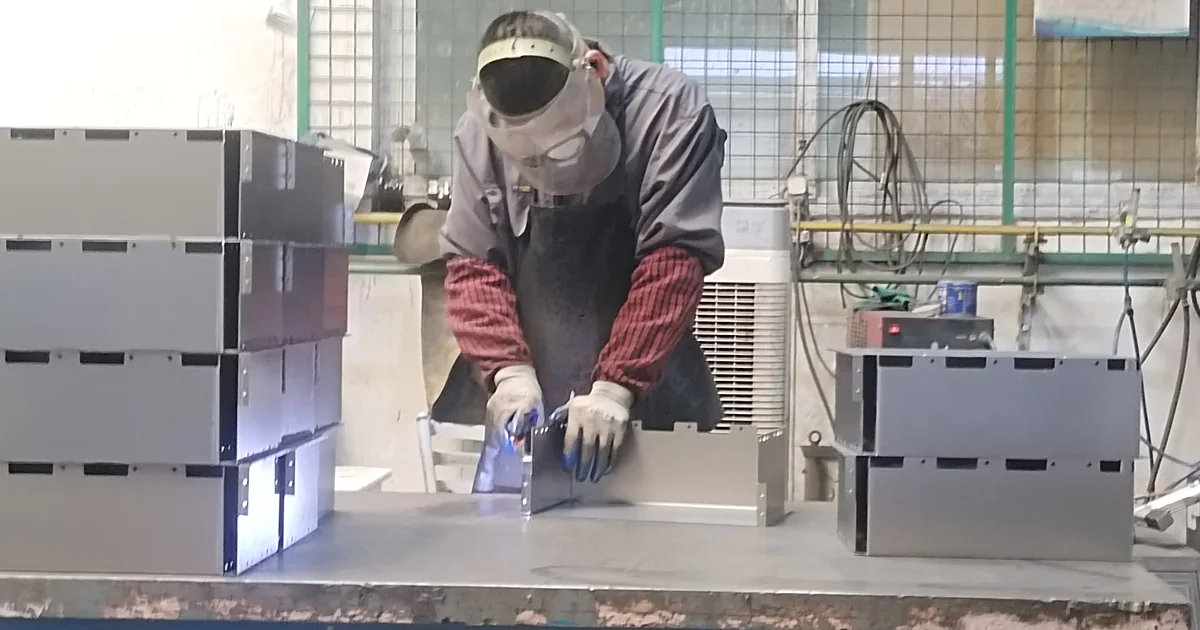
Have a Similar Trolley Project? Send It for Review
Send your trolley type, load capacity, size, wheel requirement, quantity, and drawings or reference photos. Our team will review the structure and reply within 24 hours on business days.
Urgent project? Email gao@doingmetal.com or WhatsApp +86 18158549983.