September 2, 2026
Press Brake Bending Guidelines for Trolley Shelves, Trays and Guards
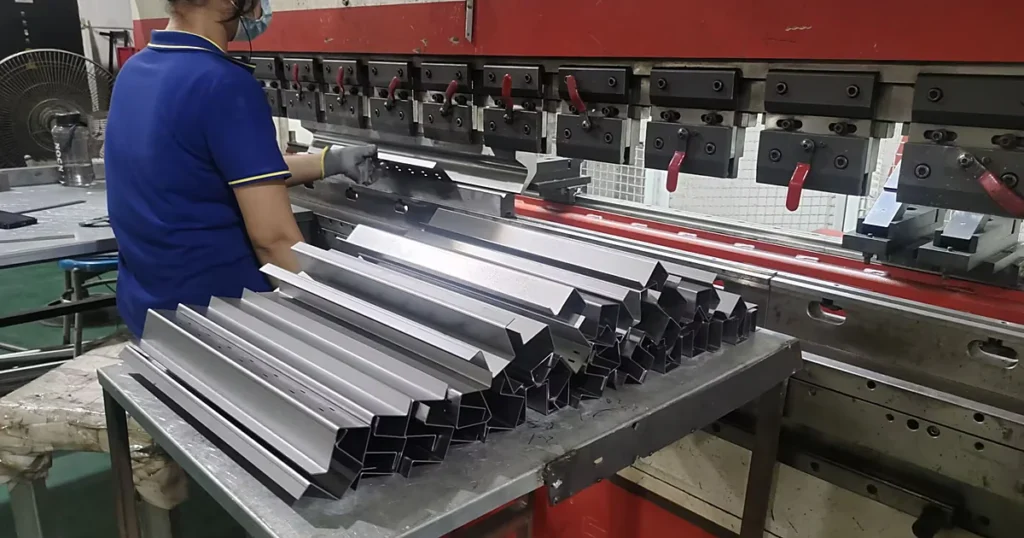
Bending is how a thin sheet becomes a strong part. A flat 1.5 mm panel sags under load; the same panel with a folded edge or a U-shaped section carries several times more. That is why trolley shelves, trays, platform edges, drawer bodies, side guards and reinforcement channels are almost always formed rather than flat. Bending adds stiffness without adding material — which on a trolley means strength without weight, and strength is the thing buyers are actually paying for.
Why formed sections matter on a trolley
Three benefits show up repeatedly in trolley design:
- Stiffness. A formed edge turns a flexible panel into a beam. Shelf decks, tray sides and platform perimeters all use this.
- Safety. A folded edge removes the sharp perimeter that cuts hands and damages cartons. This is why edge forming is specified even where strength is not the driver.
- Appearance and fit. A consistent fold gives a clean, repeatable profile, which matters on visible parts and on parts that must fit a fixture.
Tube carries the frame; formed sheet carries the surfaces. Most trolleys use both, and the interface between them — how a formed tray meets a tube frame — is where the design is settled.
Bend radius: match the material, not the drawing habit
The most common bending problem is a radius specified without reference to material or tooling. Two rules cover most cases:
- Inside radius versus thickness. A radius that is too tight relative to thickness risks cracking on the outside of the bend, particularly in aluminium and in higher-strength steels. A radius around material thickness is a common starting point for mild steel; more is safer.
- Keep it consistent. For repeat orders, use the same radius and the same tooling assumption across all drawings. Mixing radii on one assembly means tool changes, and tool changes introduce variation between batches.
State the radius you want, or state the material and let the fabricator propose a standard radius. Do not leave the radius blank — that is where “the first batch and the second batch do not match” comes from.
Flange length and minimum dimensions
A flange that is too short will not form accurately: the sheet slips or the bend lands inconsistently.
- Minimum flange is a function of material thickness, die width and the tooling. Very short flanges need special tooling or a different design.
- Adjacent bends need room between them. Two bends close together can interfere with the tooling and with each other.
- Hemmed or closed edges take two operations and need specific clearance, but they give the safest and cleanest edge on a part that is handled daily — worth it on trays and shelves.
If a design needs a very short flange, ask before finalising the drawing. There is usually a simple alternative that forms reliably.
Holes, slots and cutouts near bends
This is the single most common cause of parts that “almost fit”. Material moves during forming, so any feature close to the bend line deforms.
- Keep holes away from the bend line. A hole too close becomes oval. The safe distance depends on thickness, die width and radius — ask the fabricator for their minimum.
- Caster plate holes. These decide whether the trolley tracks straight. Keep them clear of bends, or dimension them after forming.
- Shelf fixing holes. Holes that align with a frame or a divider must be positioned with the bend allowance accounted for, not measured from the flat pattern.
- Drawer slide and hinge holes. Small positional errors here stop a drawer running smoothly, so these are worth marking critical.
- Slots and cutouts. An open feature reaching the bend line lets the material open up. Add a relief or move the feature.
A practical tip: on the drawing, state which dimensions are measured from the bend line and which from the part edge. Ambiguity here produces parts that are individually correct and mutually wrong.
Springback and formed accuracy
Every material springs back after bending, and they do so differently: mild steel springs back a little, stainless more, aluminium differently again. Compensating for it is routine, but the design has to allow for it.
- Angle tolerance. State what matters. A 90° bend on a side guard is rarely critical to a degree; the same angle on a shelf that must sit flat against a frame is.
- Length amplifies error. A small angle error on a 1.2 m shelf becomes a visible gap at the end. Long parts need tighter angle control than short ones.
- Critical dimensions. Decide whether the controlling dimension is the outside size, the inside clear space, the hole-to-hole distance, or the assembled fit. Tell the fabricator which — they cannot all be critical at once.
Common trolley parts and how they are formed
- Shelf decks — folded edges on all sides, sometimes a full tray section. Edge height usually follows the containment requirement.
- Trays — a shallow U or a tray with returned edges; hemmed where hands go.
- Platform edges — a down-turned lip for stiffness and safety.
- Drawer bodies — formed from one blank with folded sides, welded or clinched at the corners.
- Side guards and rails — simple angles or channels, sometimes with returned edges for rigidity.
- Reinforcement channels — formed sections welded under a deck to carry point loads without thickening the plate.
Frequently asked questions
What bend radius should I specify?
Match it to material thickness and grade. If you are unsure, state the material and ask for a standard radius — and then keep that radius constant across the assembly and across repeat orders.
Why did holes near a bend come out oval?
Material stretches and flows during forming. Features within the deformation zone move. Keep holes clear of the bend line, or add relief notches.
Can two parts from different batches be guaranteed to fit?
Yes, if the radius, tooling and material are specified and held constant. That is why freezing these details on the drawing matters more than it appears to.
How do I stop a long shelf bowing?
Form the edges rather than thickening the plate, and add a formed reinforcement channel underneath if the span is long or the load is a point load.
RFQ checklist
- Drawing with material grade, thickness and formed dimensions.
- Bend radius and flange lengths, or a request for a standard radius.
- Critical dimensions clearly identified: outside size, inside clear, hole centres, or assembled fit.
- Holes and slots near bends, and whether relief is allowed.
- Angle tolerance where it matters, especially on long parts.
- Edge treatment: hemmed, returned, or deburred only.
- What follows: welding, coating, galvanizing or assembly.
Formed parts are where a trolley gains stiffness without gaining weight. Send the drawing and material specification, or see the CNC bending page for tooling and capability detail.
Related pages: CNC bending, tool trolley, and library book trolley.
Who We Are
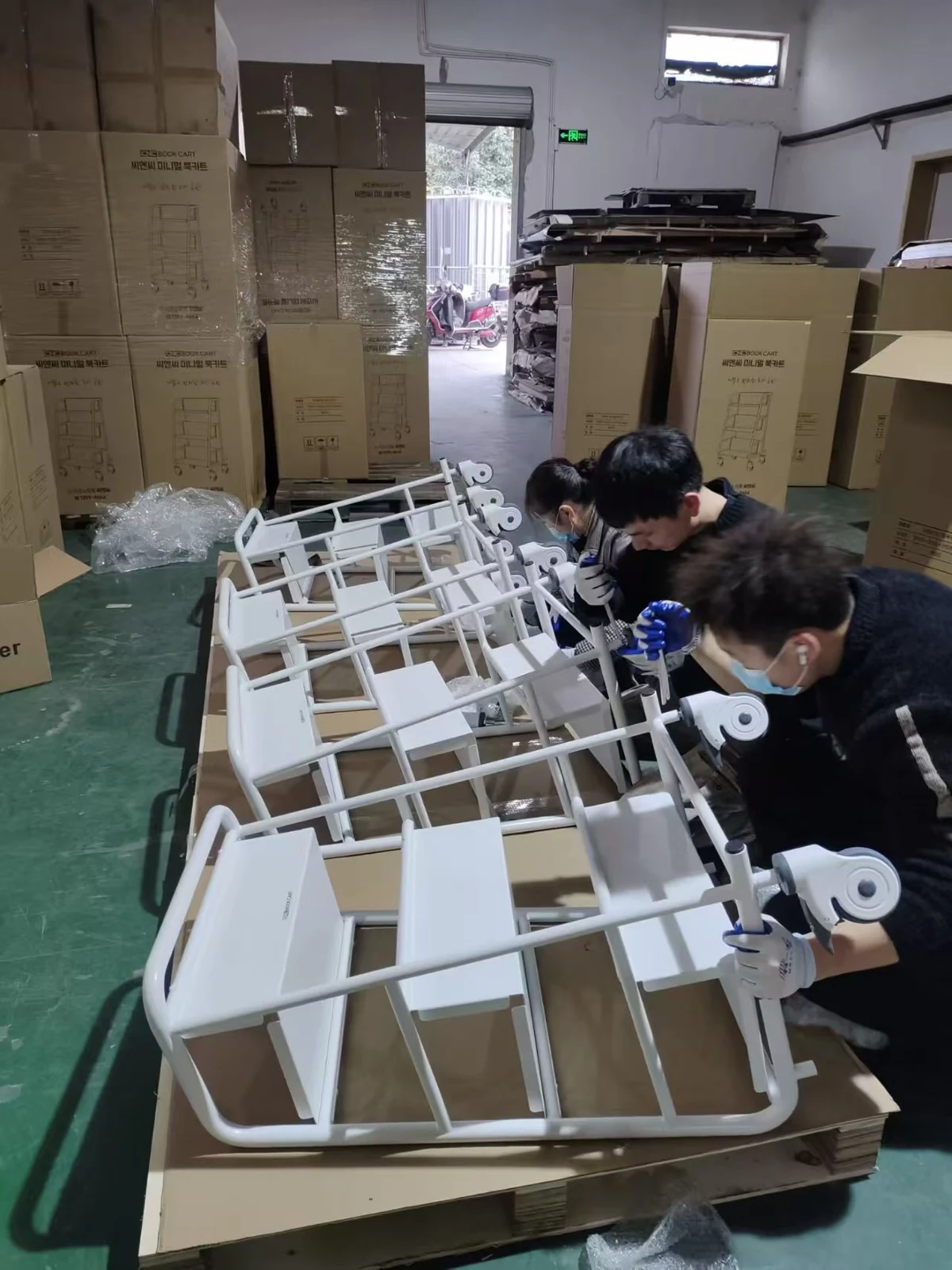
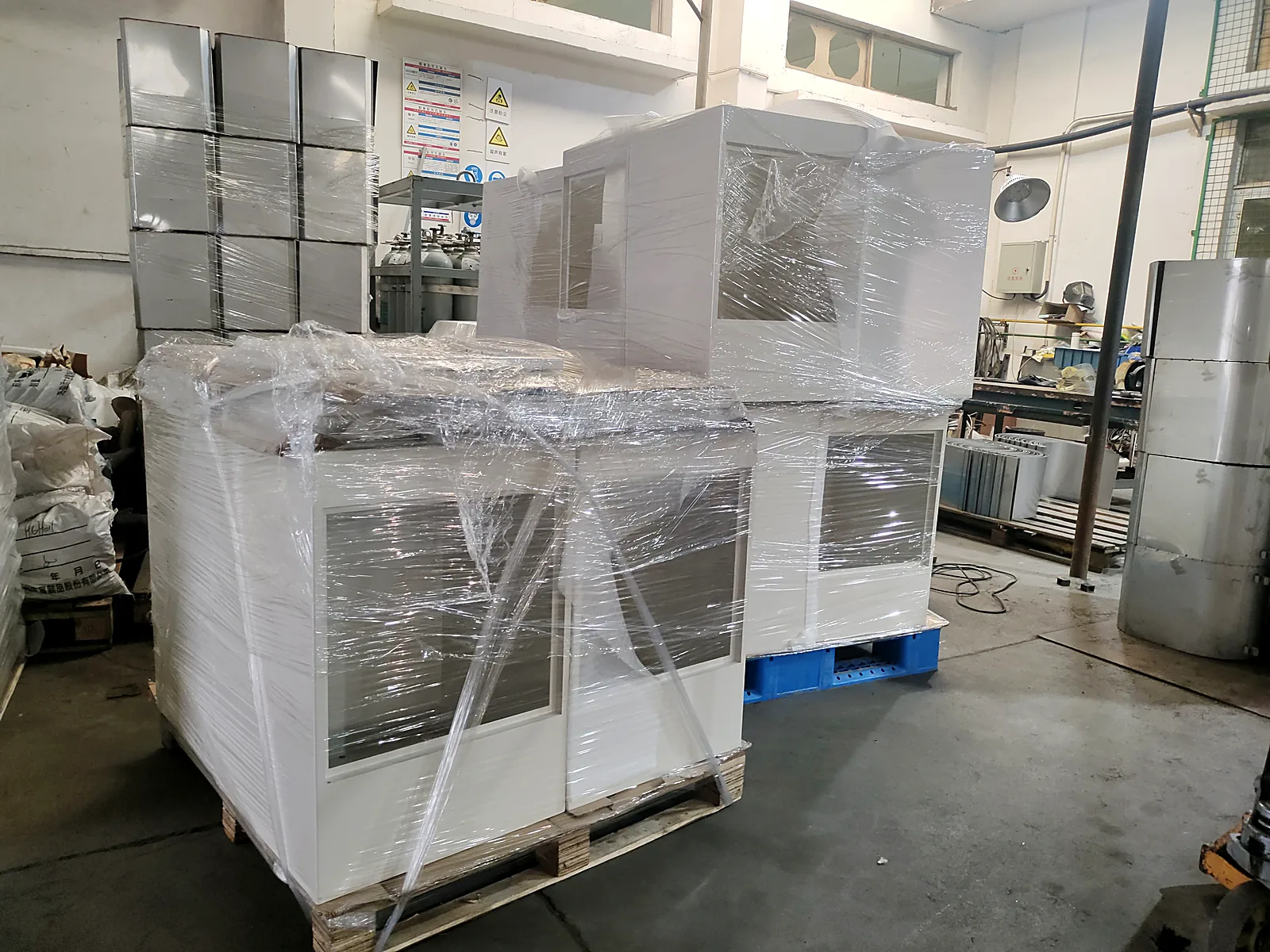
Doing Metal is the trolley-focused manufacturing site of Ningbo Fulei Metal Products. Founded in 2016, we build custom metal trolleys in our own workshop — from a drawing, a photo or just a clear idea of the job.
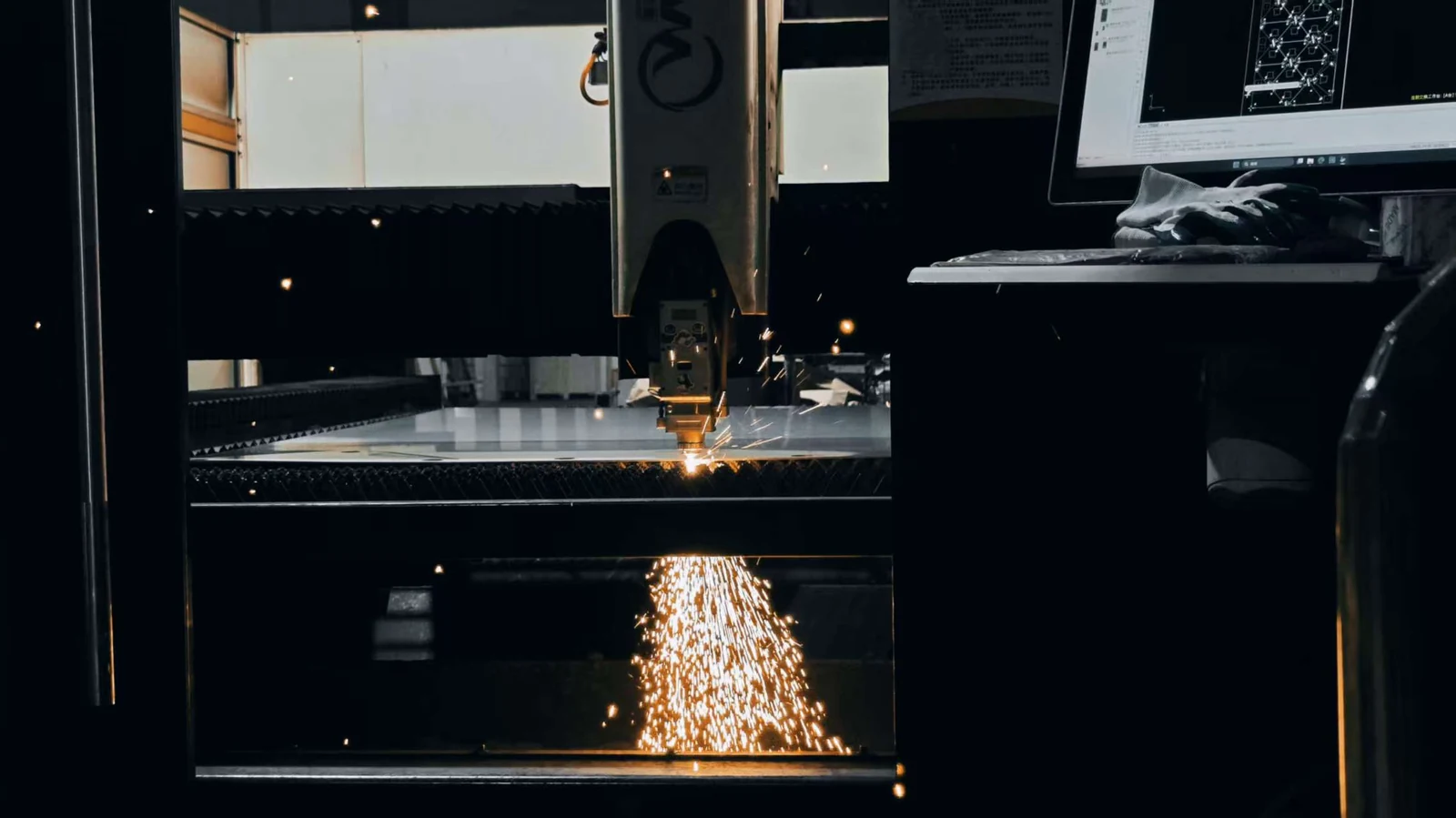
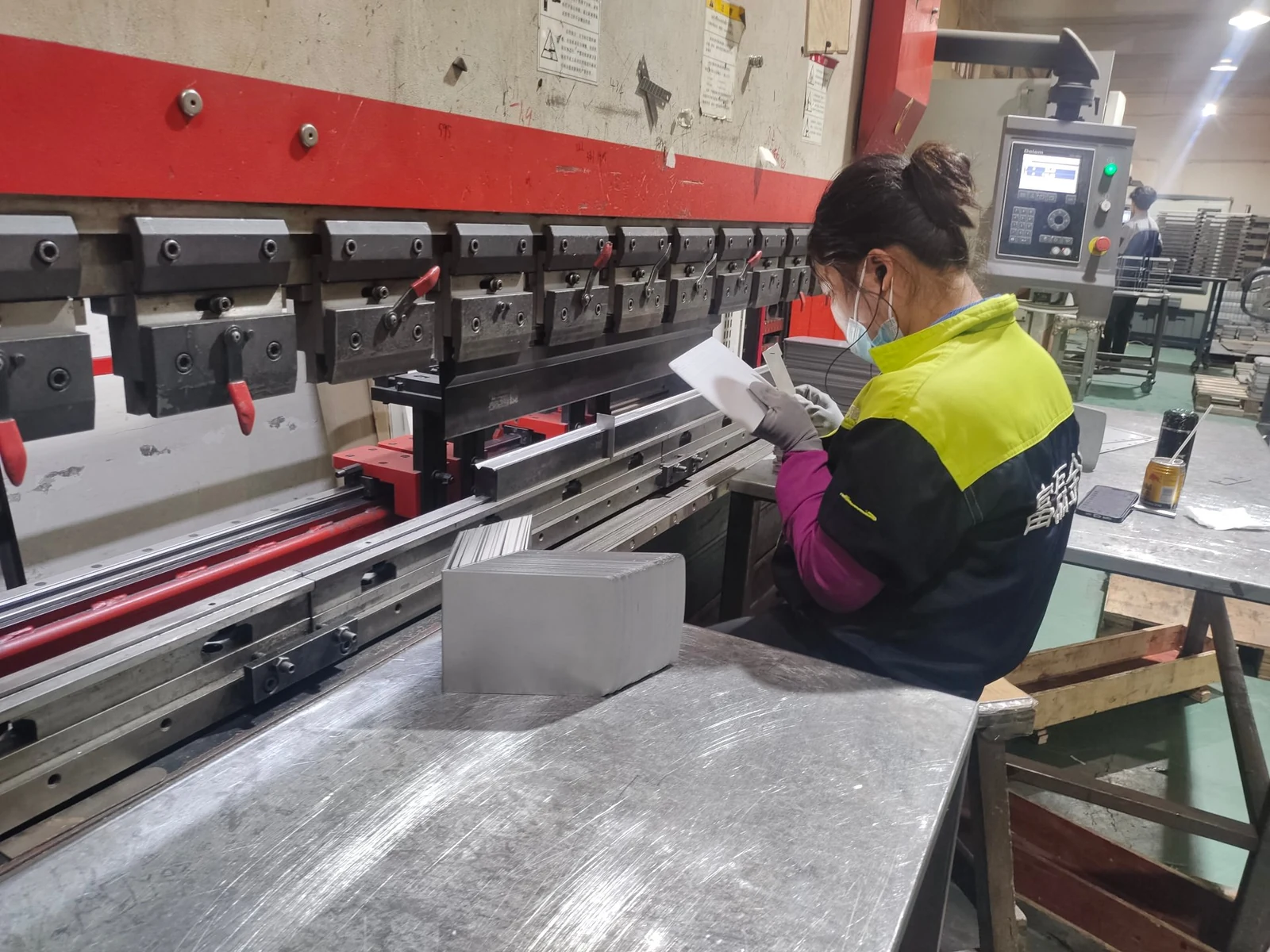
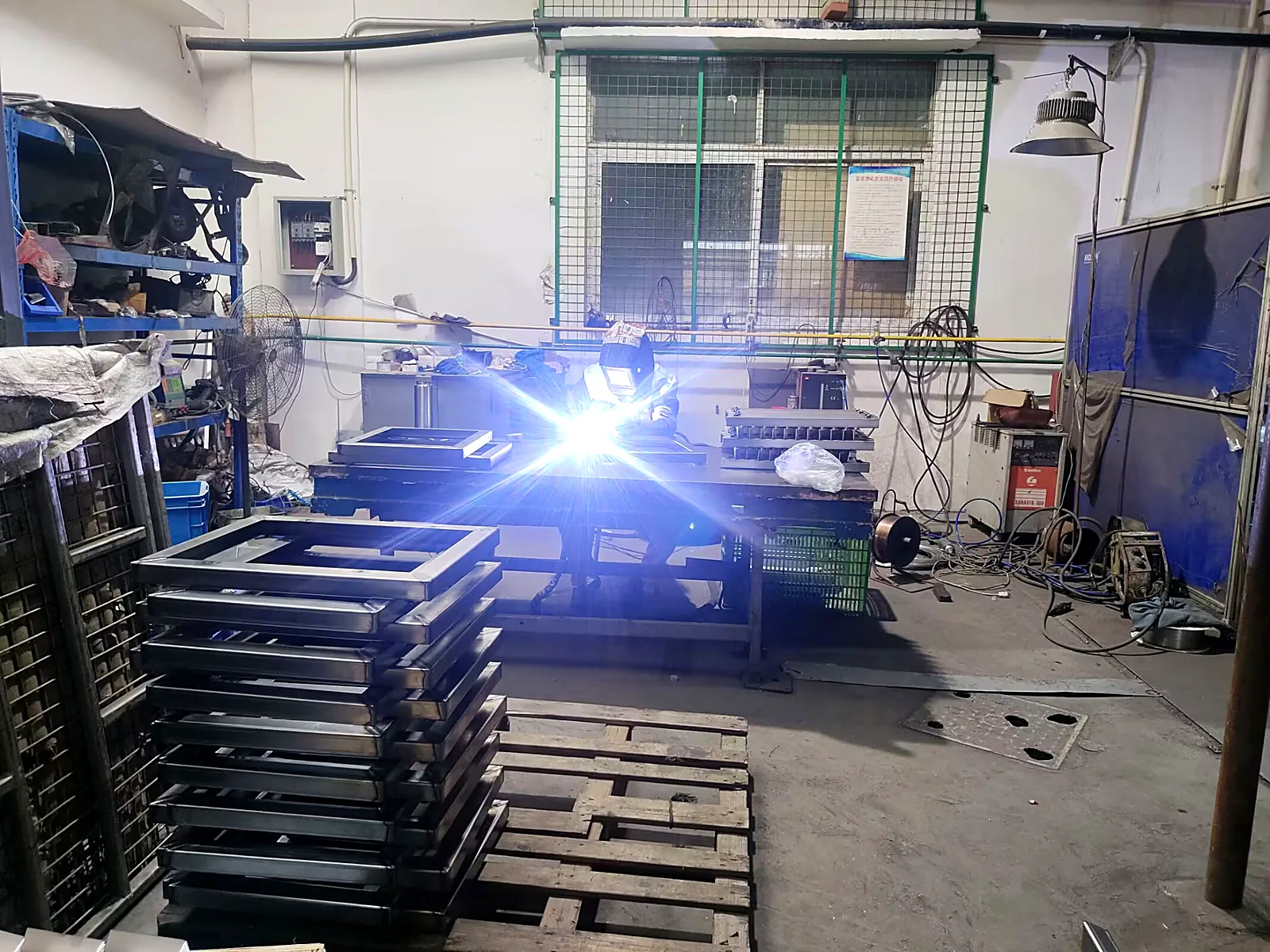
Our Ningbo floor handles the full route in house: laser cutting, CNC bending, welding and riveting, leveling, powder coating, assembly and inspection. One team, one drawing, one accountable partner — from the first sample to a controlled repeat order.
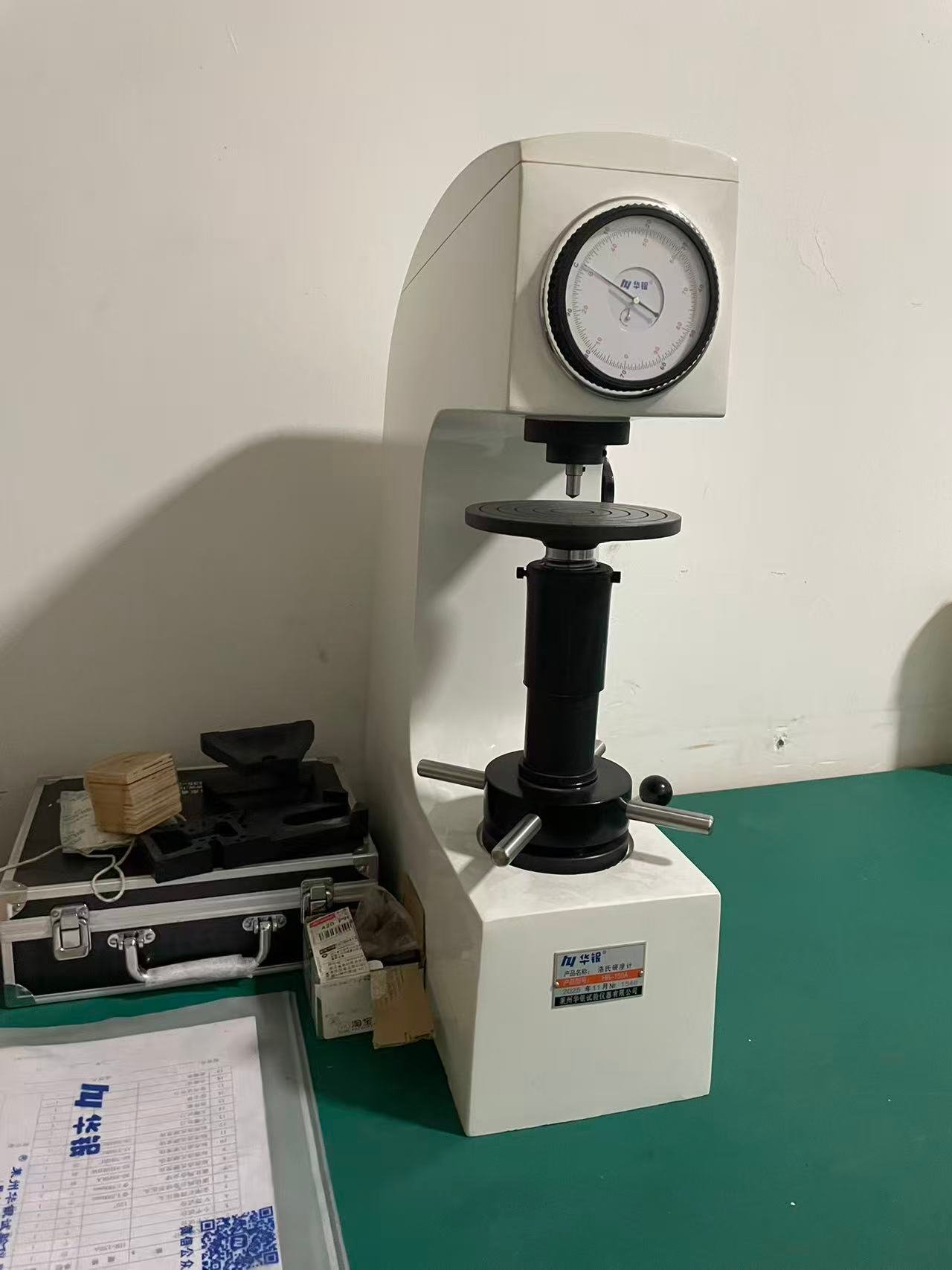
We are an independently audited factory (Bureau Veritas report MIC-ASR263630) and we state our credentials plainly.
Get to know us →Have a Similar Trolley Project? Send It for Review
Send your trolley type, load capacity, size, wheel requirement, quantity, and drawings or reference photos. Our team will review the structure and reply within 24 hours on business days.
Urgent project? Email gao@doingmetal.com or WhatsApp +86 18158549983.