
November 4, 2026
Building a Kart Lift Trolley From a Photo
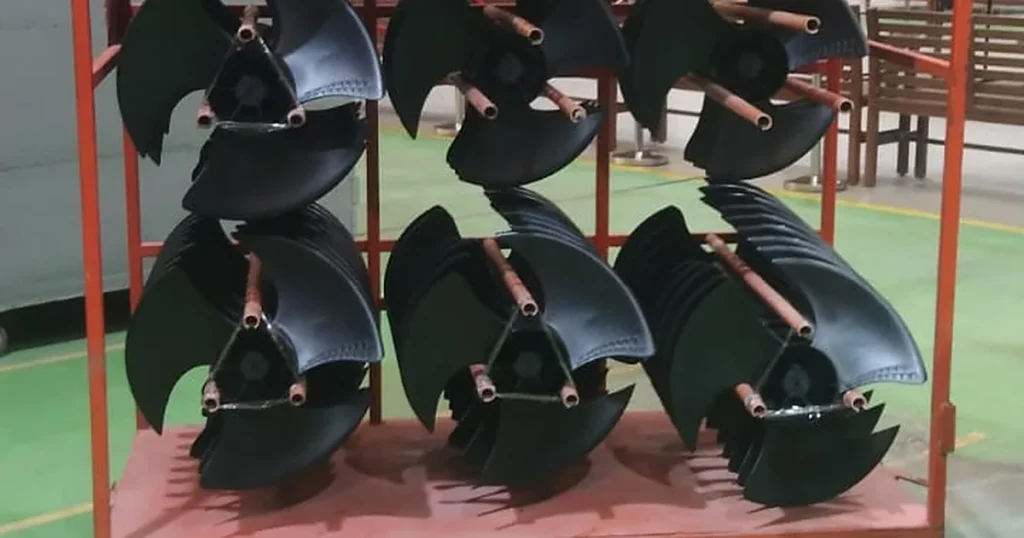
When a European motorsport accessory business approached us with a photograph of a kart transport trolley they had seen on the market and a short list of functions they needed, the brief was clear in intent but light on engineering detail. They wanted a trolley that could cradle a racing kart by its chassis, lift one end off the ground with a hand-operated winch, and roll quietly across a pit lane or a polished garage floor. This is a classic custom fabrication job: the real work is turning a reference image and a handful of measurements into a safe, repeatable, production-ready product rather than copying a picture.
- Load range we build to: 80–1,000 kg per trolley, sized to the real product and cradle geometry.
- Framing: round or square tube from Ø20–50 mm with 1.2–3.0 mm wall; shelf and panel plate 0.8–3.0 mm.
- Casters: 75–200 mm in PU, rubber, nylon or pneumatic, matched to floor type, load and noise limits.
- Finish and terms: powder-coat film 60–80 µm; MOQ 50 units; sample 7–15 days; production 25–35 days; tooling quoted separately.
- We can produce the drawing, but we recommend you supply your own. Our drawing work normally starts from USD 1,000, takes 10 days or more, and complex products can take six months to a year; the fee is quoted case by case.
- Certification scope: we hold a Bureau Veritas factory audit (MIC-ASR263630, 2026-10-09). We do not issue ISO 9001, CE, UKCA, UL, EN 1090, ISO 3834 or EN 10204 3.1 in our name, and we make no food-contact statement.
Start From the Function, Not the Photo
A reference photo tells you what something looks like, not why it works. For a kart lift trolley the first questions are functional. Where does the chassis rest, and at what spacing? How high must one end lift so a wheel clears the floor? What is the combined mass of kart plus cradle, and how is that mass distributed when the trolley is tilted by the winch? We answer those before we draw a single tube. When a customer already has a dimensioned drawing, the engineering step is short; when they only have a photo and a list of wants, we scope the structure and confirm the numbers together. Our engineering service exists for exactly this hand-off, and we are always happier when the client supplies their own drawing.
One early decision is whether the kart is held by its own frame or by its wheels. Holding by the chassis keeps the wheels free and makes a compact trolley, but it concentrates load at two or four contact points. Holding by the wheels spreads load but needs shaped cradles. For the reference we were given, a chassis cradle with padded contact faces was the simpler, lighter answer, and it kept the trolley inside the standard 80–1,000 kg envelope we build to.
Frame, Tube and Lift Geometry
The frame is the heart of the build. We work in round or square tube from Ø20–50 mm with a 1.2–3.0 mm wall, chosen so the frame bends in the right places under load and stays stiff where it matters. A lift trolley adds a second job: the winch and the hook arm must pull along a controlled path, not fight the frame. We locate the winch low and central, run the strap over a guided roller, and let the hook arm pivot on a tube that is itself part of the main structure rather than a bolt-on afterthought.
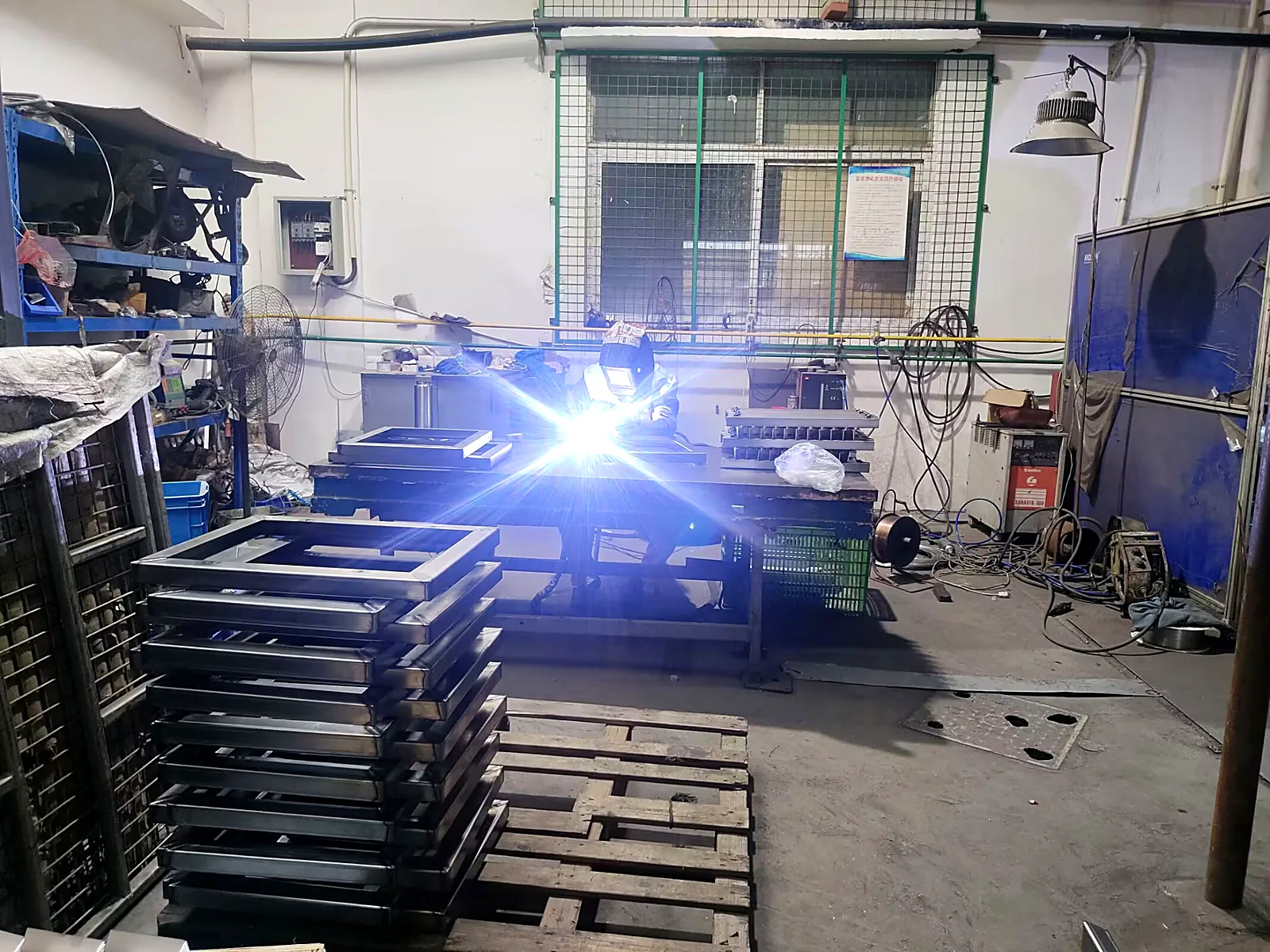
Weld quality decides how the trolley feels after a year of use. Tube joints are jig-welded so every unit matches the first article, and the cradle faces get a soft, non-marring lining so a painted or anodised kart is never scratched in transit. Because the lift changes the centre of gravity, we verify the unloaded trolley will not tip when the kart is raised, and we set the casters and the base width to keep the stability margin comfortable. If you are comparing this with a simpler platform trolley, the extra geometry work is the difference between a trolley that carries and one that lifts safely.
Casters and Floor Behaviour
Casters run from 75–200 mm, and the choice drives noise, push force and floor marking. On a polished pit-lane floor we favour non-marking PU on a swivel head with at least two brakes, so the trolley stays put while the kart is winched. On rough concrete a slightly larger pneumatic or solid rubber wheel rolls better and protects the load. We also think about the loaded height: a kart raised at one end shifts weight onto the rear casters, so those get the highest rating in the set.
Brake type matters more than buyers expect. A pedal brake is easy to lock with a foot; a total-lock brake holds both wheel and swivel, which is what you want on a slope. We document the caster specification on the drawing so replacements are easy to source years later, and we keep the swivel heads serviceable rather than sealed for life.
From One Prototype to a Repeatable Batch
We nearly always start with one prototype. The sample stage runs 7–15 days and lets the client confirm the cradle fit, the lift height and the floor behaviour before we commit tooling. Production then runs 25–35 days, with a minimum order of 50 units so the jigs and any bespoke fixtures are amortised. Tooling and fixtures are quoted separately from the unit price, because a one-off prototype and a 500-unit run are different engineering jobs.
Once the first article is approved, every trolley is built to the same jig and the same drawing. That repeatability is what lets a distributor stock the product and trust that unit number 200 behaves like unit number one.
What to Send Us to Move Fast
If you have a reference product and want it built or improved, the fastest start is a dimensioned drawing plus the kart’s contact points and mass. Where a client prefers we develop the drawing, our work normally starts from USD 1,000 and takes 10 days or more; complex products can take six months to a year, and the fee is quoted case by case before production begins. We do not promise to offset drawing fees against the order, and we deliver PDF dimensioned drawings and rendered visuals rather than CAD source files. For full guidance on what to package before you ask for a quote, see our buyer guides.
Have a Similar Trolley Project? Send It for Review
Send your trolley type, load capacity, size, wheel requirement, quantity, and drawings or reference photos. Our team will review the structure and reply within 24 hours on business days.
Urgent project? Email gao@doingmetal.com or WhatsApp +86 18158549983.