
November 4, 2026
Designing a Team Equipment Trolley
A Nordic sports start-up approached us with an idea, not a drawing. They wanted a small family of equipment carts for teams – something to move sticks, helmets, bottles and small gear between the bench and the storage room – and they had a list of use cases but no engineering files. For us this is a familiar shape of project: an ODM engagement where we design, prototype and support small-batch production, then help the brand scale once demand is proven.
- Load rating built to 80-1,000 kg by frame design; a team equipment cart usually sits in the 80-250 kg range.
- Frame tube: O20-50 mm outer diameter, wall 1.2-3.0 mm; shelves and bins in plate 0.8-3.0 mm, or aluminium for lighter weight.
- Casters: 75-200 mm diameter in PU, rubber, nylon or pneumatic, chosen for the surfaces the team actually rolls over.
- Business terms: MOQ 50 units, sample in 7-15 days, mass production 25-35 days, tooling and fixtures quoted separately.
- Engineering service: we recommend you supply your own drawings. Where we produce them, the work normally starts from USD 1,000 and takes 10 days or more; complex products can take six months to a year. Quoted case by case before we start (PDF + rendered view only, no CAD source released).
- Certification: we hold a Bureau Veritas factory audit, report MIC-ASR263630 (2026-10-09). We cannot provide ISO 9001, CE, UKCA, UL, EN 1090, ISO 3834 or EN 10204 3.1 in our name, and we issue no food-contact statement.
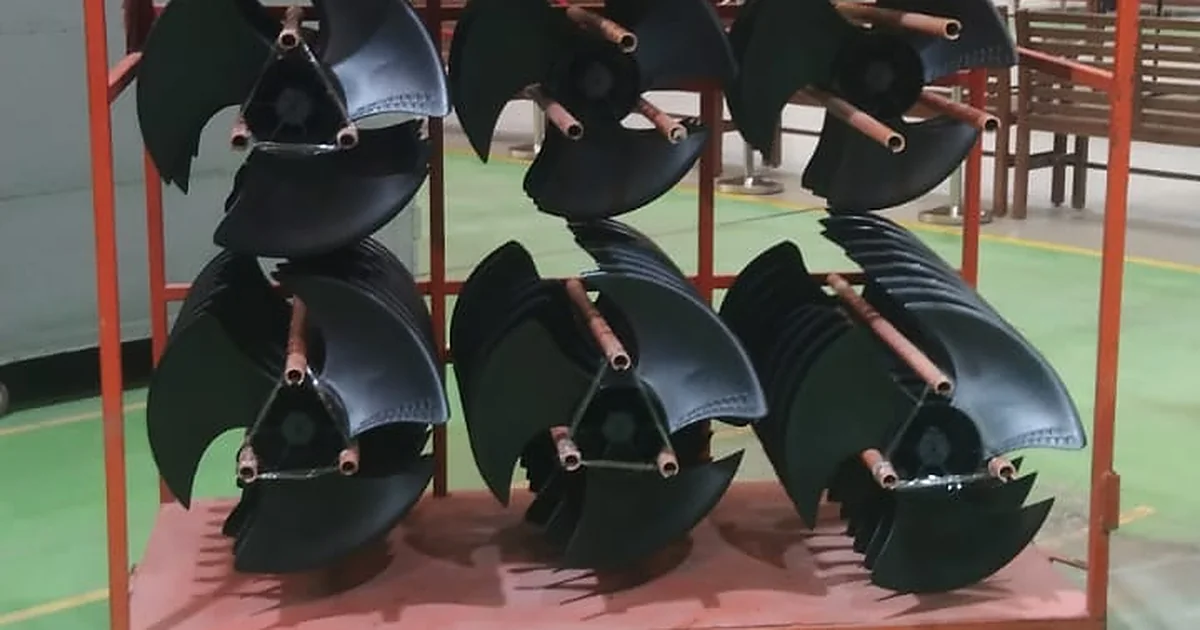
A custom rack trolley built in our Ningbo workshop.
Why a concept is enough to start
Many first-time buyers assume they need a finished specification before talking to a factory. They do not. A clear description of who uses the cart, what goes on it, and where it travels is enough for us to propose a layout. In this case the brand knew the cart had to carry bulky but light items, survive being dragged across a changing room and a car park, and look good in a team photo. Those three sentences framed the entire first concept.
Choosing the platform shape
We began with the platform trolley as the structural baseline, then adapted it for gear rather than boxes. A flat deck was kept low for stability, with a perimeter rail so items could not slide off during a quick move. Above the deck we added a light rack zone for sticks and a shallow bin for small parts. The frame used round or square tube in the O20-50 mm range with 1.2-3.0 mm walls – strong enough for the load, light enough for one person to manhandle.
Material: steel where it earns it, aluminium where it saves weight
For a cart a player might lift into a van, every kilogram counts, so we proposed aluminium for the upper structure and powder-coated steel only where stiffness mattered. Where the brand preferred a single material for simpler finishing, a full carbon-steel build at 60-80 um coating was the lower-cost alternative. Either way the geometry was identical, so the decision was purely about weight, budget and appearance.
From concept to a drawing you can approve
Because the buyer had no CAD, we produced the first concept in house. Our engineering service returns a dimensioned PDF and a rendered view you can show investors and teammates, and we do not release the CAD source – you get the drawing, not the file. Drawing work of this kind normally starts from USD 1,000 and takes 10 days or more; a cart with bespoke tooling or a folded enclosure can take six months to a year. The fee is quoted case by case before starting. Our recommendation is to have the drawing made on your side first.
Details that make a sports cart usable
The difference between a cart that gets used and one that gathers dust is in the details. We specified casters in the 100-125 mm range with swivel mounts and brakes so it stays put on a slope, soft tyres so it is quiet in a corridor, and a handle height matched to the people pushing it. Bottle holders were sized to common bottle diameters rather than guessed, and the rack spacing left room for bulky protective gear. None of these items appear in a concept brief, which is why we review them with the buyer before cutting metal.
Protecting the brand through the build
Because this was an ODM project, the cart would carry the brand’s name, not ours. We keep that separation clear: the buyer owns the design intent, we own the manufacturing know-how. We do not release the CAD source, and we do not list the cart in our public catalogue without permission. That protects the brand’s differentiation and keeps the relationship a partnership rather than a transaction. When the brand is ready for a second variant – a narrower cart, a taller one, a version with a lockable drawer – the shared geometry means we can turn it around quickly without re-proving the basics.
Finishing is where a sports cart earns its look. A matte powder coat hides scuffs from a busy changing room better than a gloss one, and a two-tone scheme can carry team colours without adding cost. We sample the finish on a small panel before committing the batch, so the colour on the floor matches the colour in the mock-up.
Prototype, then scale
We built a sample within the standard 7-15 day window and shipped it for real-world testing – dragging it across the surfaces the team actually uses. After approval, production of 50 or more units runs 25-35 days. Tooling is minimal because the structure is welded tube and folded plate, so the brand could start with a small batch, prove the market, and reorder without re-engineering. For buyers planning a larger programme, our buyer guides cover MOQ, lead time and how repeat orders are priced.
If you have a product idea that lives only in a sketch or a sentence, that is where we start, not where we stop. Send the concept and we will return something you can put on the floor.
Have a Similar Trolley Project? Send It for Review
Send your trolley type, load capacity, size, wheel requirement, quantity, and drawings or reference photos. Our team will review the structure and reply within 24 hours on business days.
Urgent project? Email gao@doingmetal.com or WhatsApp +86 18158549983.