November 2, 2026
Custom Hookah Trolley: Built to Your Drawing
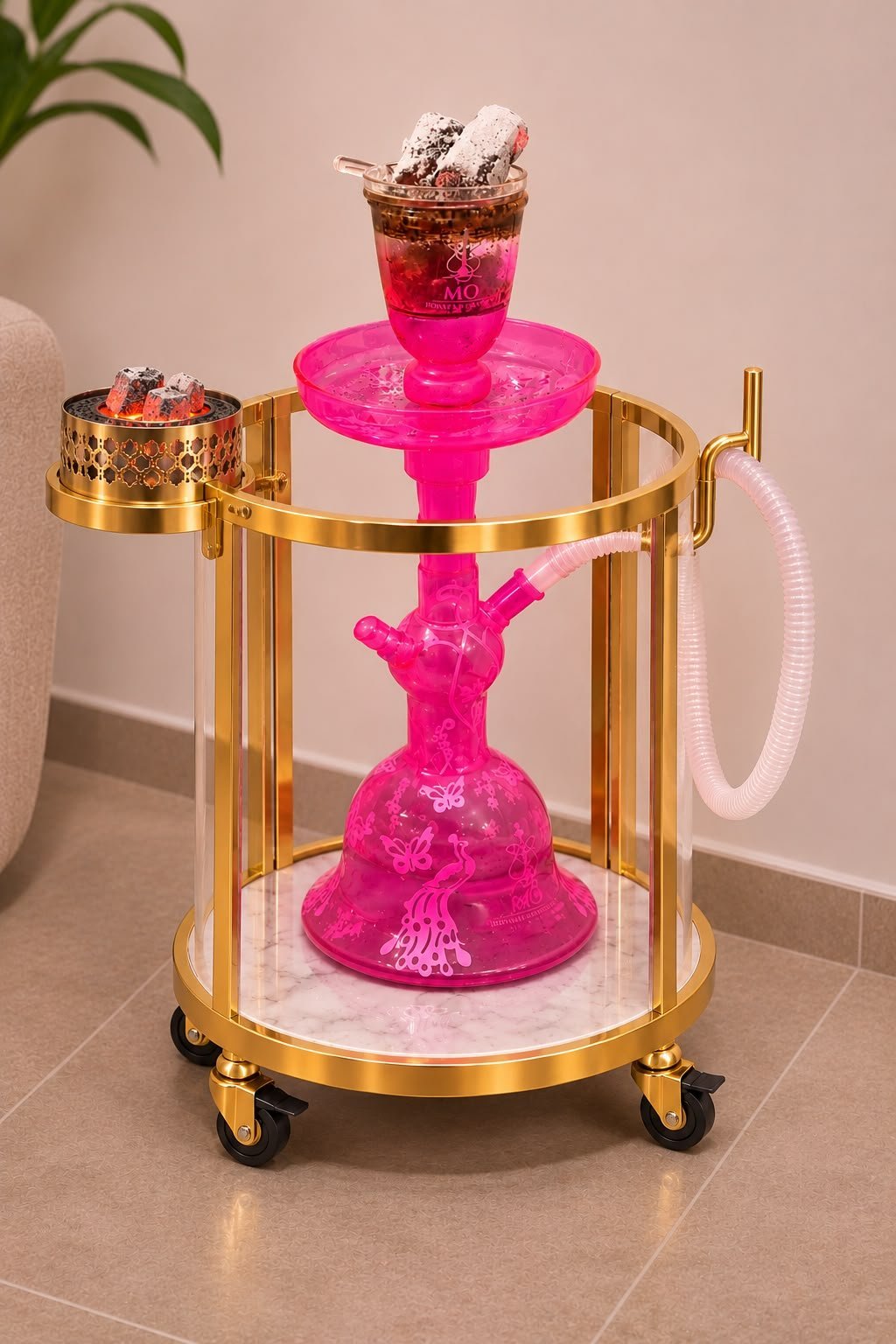
We recently worked with a client on a custom hookah (shisha) trolley for a lounge. It is a good example of the kind of build we do best: a concept comes in, we turn it into a dimensioned, manufacturable trolley, and the result is built to the client’s drawing rather than pulled from a catalogue. This post walks through how a build like this is approached.
- Material: stainless steel 304 as standard, 316 on request. Frame tube OD 20-50 mm, wall 1.2-3.0 mm; tray and shelf sheet 0.8-3.0 mm.
- Casters: 75-200 mm in PU, rubber or nylon, with brakes for indoor lounge floors.
- Load range we build to: 80-1,000 kg across our trolley line; a hookah trolley sits at the light end but carries the same tolerance and finish discipline.
- Commercial: MOQ 50 units, samples 7-15 days, production 25-35 days, tooling quoted separately.
- Certification boundary: Bureau Veritas audit report MIC-ASR263630 (2026-10-09). We cannot provide ISO 9001, CE, UKCA, UL, EN 1090, ISO 3834 or EN 10204 3.1 certificates, and no food-contact declaration.
What a hookah trolley actually needs
A hookah trolley is a hospitality piece, not an industrial one, but the engineering questions are the same. The trolley has to carry a heavy glass base and a hot charcoal burner without tipping, roll quietly across a tiled or wooden lounge floor, and look the part. In practice that means four things:
- A stable, level tray or shelf for the bowl and the charcoal burner, sized to the client’s hardware.
- Smooth-rolling casters with brakes, so the trolley stays put when it is being used and moves easily when it is not.
- A handle, and often a small rail or hook to keep the hose from dragging on the floor.
- A frame style – open cage for a light look, or a closed panel for a more solid, premium feel.
Materials and build range we work to
For a lounge environment we usually build the frame from stainless steel 304, with 316 available where corrosion resistance matters more than cost. The tube is 20-50 mm in outer diameter with a 1.2-3.0 mm wall, and the tray or shelf is formed from 0.8-3.0 mm sheet. Casters run 75-200 mm, chosen for the floor and the look. The powder coat sits at 60-80 micrometres, which is thick enough to take daily handling in a busy venue.
Our factory builds trolleys across an 80-1,000 kg load range. A hookah trolley is at the light end of that, but the same fabrication tolerances apply – a wobble that would be invisible on a 500 kg cage trolley is obvious on a trolley holding a glass water pipe.
From concept render to production drawing
Most clients do not arrive with a sheet-metal fabrication drawing – they arrive with a rendering, a photo, or a sketch. Our advice is to have the drawing made on your side first. We do have drawing capability, but it normally starts from USD 1,000 and takes 10 days or more, because the communication and engineering time are substantial; a complex build can take six months to a year. The fee is quoted case by case before any work starts. You receive a PDF dimension drawing and a rendered image – we do not release CAD source files. For a hookah trolley, the drawing conversation is mostly about tray size, caster mounting, and how the handle and hose hook attach.
Finishes for a lounge environment
The look matters as much as the structure in a hookah lounge. Beyond standard powder coat, we can match a specific colour and produce gold or brass-toned frames through plating or a metallic powder. We state one boundary plainly: we do not certify food-contact surfaces. A hookah trolley is not a food item, but buyers often ask, so it is worth saying up front.
Commercial terms
Minimum order is 50 units. Samples are typically ready in 7-15 days and production in 25-35 days after the drawing is approved, with tooling and fixtures quoted separately per project. Because every unit is built to a drawing, the unit price depends on the materials, the finish, and the quantity – there is no off-the-shelf price list.
Certification boundary
We hold a Bureau Veritas factory audit, report MIC-ASR263630 dated 2026-10-09. We do not hold ISO 9001, CE, UKCA, UL, EN 1090 or ISO 3834, and we cannot issue an EN 10204 3.1 certificate under our own name. We publish this boundary openly because a buyer planning a venue order needs to know it before they spec the project, not after.
Where to go next
If you are specifying a stainless trolley of any kind, the stainless steel trolley page covers our general build range, and the engineering service page explains how a concept becomes a production drawing. For the full set of build guides, see the buyer’s guides.
Have a Similar Trolley Project? Send It for Review
Send your trolley type, load capacity, size, wheel requirement, quantity, and drawings or reference photos. Our team will review the structure and reply within 24 hours on business days.
Urgent project? Email gao@doingmetal.com or WhatsApp +86 18158549983.