September 22, 2026
First Article Approval for Custom Trolleys | Doing Metal
A drawing is an agreement about geometry, not about whether the finished cart feels right in the aisle. That gap – between what was specified and what arrives – is where most disputes on custom programmes begin. A first article approval closes it at the cost of one unit and a few days.
What a first article is
A first article is the first unit produced with production tooling and methods, inspected against the drawing and submitted for your approval before the rest of the batch is built. It is not a prototype made differently from the batch; it is the batch’s first child. Anything else gives false comfort.
Why it pays for itself
Consider what the cart actually touches in daily service: your aisle dimensions, your floors, your operators’ hands and your customers’ expectations. Each of those can differ from assumption:
- The handle may be perfect on paper and awkward when the cart is loaded
- The shelf may pass a static load test and still deflect in the way operators notice immediately
- Brake pedals can be unreachable once real cargo is loaded
- Door and panel clearances often only reveal themselves with real cartons inside
Fixing these before the batch costs nothing beyond time. Fixing them afterwards means rework, air freight or a written-down programme.
How to run the approval
Step 1: agree what gets checked before anything is signed
Write down the checklist in the RFQ. Typical items include critical dimensions, material, finish, wheel specification, load behaviour, brake function and packing. Our inspection approach is drawing-led, so anything you want verified must be stated.
Step 2: test it in the real working environment
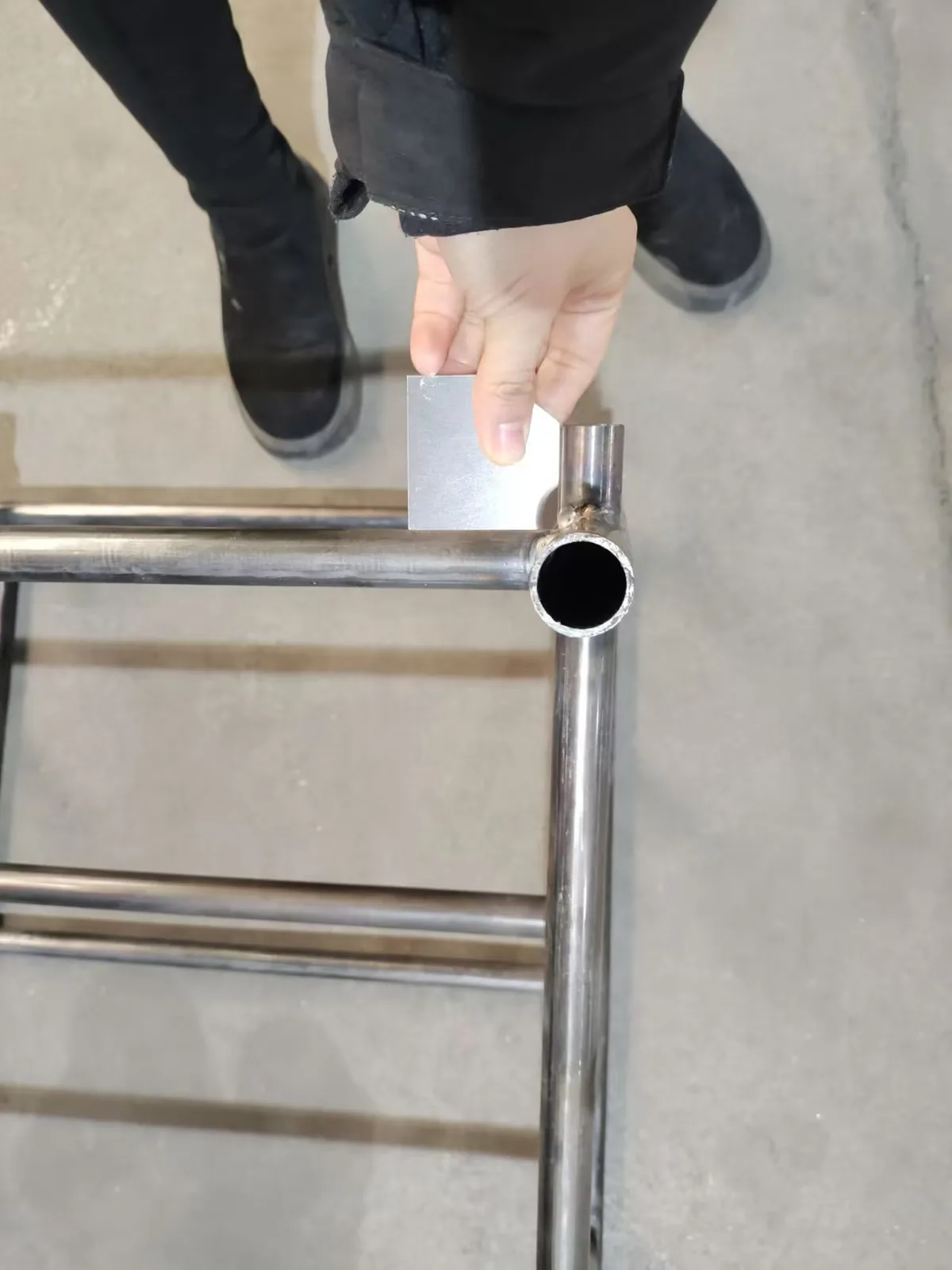
Send the sample down the worst route, through the narrowest door, over the roughest floor. Load it the way operators actually load it, not the way the drawing imagines. Photograph everything – photos are the fastest possible specification change request.
Step 3: involve the people who will use it
Purchasing approves drawings; operators know whether the cart works. A half hour with a picker or a maintenance engineer usually produces better feedback than a week of internal review.
Step 4: record the result
Either acceptance, or a written deviation list tied to drawing revisions. “About right, carry on” is how year-two orders drift away from year-one performance.
Common first article findings
- Handle position. The single most revised item – usually needs to come up or go shorter for the turning circle.
- Brake reach. Blocked by cargo, panels or shelves once the cart is loaded.
- Shelf deflection. Acceptable empty, visible loaded, particularly on wide spans.
- Noise. Hard wheels on hard floors are louder than expected in quiet environments.
- Packing damage. Scuffed finishes from insufficient separation inside the carton.
Each is cheap to change at this stage and expensive later.
First article and repeat orders
Once approved, the drawing with its revision level becomes the reference for every subsequent order. Both sides keep it, jigs are retained, and the next batch can be quoted and produced against a known standard. Programmes that skip first article approval tend to rediscover the same issues with every reorder, usually with a different urgency attached.
What documentation should come with the sample
The sample should arrive with enough information to be reviewed by someone who did not write the drawing. Ask for:
- Dimensional check against the drawing critical dimensions
- Material information, and certificates where they were requested in the RFQ
- Finish reference, especially where colour is brand specific
- Wheel and caster specification actually fitted
- Photographs of the unit before packing, including joint detail and any areas of concern
Documentation agreed in advance is far easier to arrange than requesting it after the sample lands on your dock.
When a deviation is acceptable
Not every difference needs a drawing revision, and rejecting a sample over cosmetic detail can cost weeks. A practical split:
- Acceptable with a note: cosmetic variation within agreed finish limits, minor marks on non-visible surfaces, packaging differences
- Needs revision: any critical dimension outside tolerance, any functional failure, any component different from the agreed specification
- Needs discussion: deflection that is within tolerance but visible in use, noise on a specific floor, handle feel
Record which category each point falls into and why. It becomes the reference when the same question comes up on the next batch, and it usually does.
Frequently asked questions
How long does a first article take?
Depends on complexity: add it to the production schedule rather than assuming it runs in parallel. We will quote the sample lead time alongside the batch.
Do we pay for it separately?
Yes, the sample is priced as such, because its setup costs are real. Ask about how that cost is treated once the batch quantity is reached.
Can we change our mind after approval?
Technically yes, but any change restarts the approval and the drawing revision. It is why we recommend testing in the real environment before signing.
Want a sample built before committing to the batch? Ask through the RFQ form.
Have a Similar Trolley Project? Send It for Review
Send your trolley type, load capacity, size, wheel requirement, quantity, and drawings or reference photos. Our team will review the structure and reply within 24 hours on business days.
Urgent project? Email gao@doingmetal.com or WhatsApp +86 18158549983.