September 2, 2026
Powder Coating, Galvanizing or Stainless Steel: Which Finish Fits Your Trolley?
Finish choice is a lifetime-cost decision, not a colour decision. On a trolley, the coating has to survive the same abuse as the frame: impact from loads, scraping against racking, washdown, condensation in a container, and the knocks that happen when a bulky welded assembly is packed and shipped. Two trolleys built from identical steel can have completely different service lives purely because of how the surface was prepared and what was put on it. This guide covers the finishes that actually get specified on industrial trolleys and the questions that separate them.
What the finish has to survive
Before comparing processes, describe the service. The questions that change the recommendation are always the same:
- Indoor, outdoor, or both? UV, rain and condensation change everything.
- Washdown or cleaning method? Frequency, water pressure, detergent type and temperature.
- Chemical exposure? Oils, solvents, salts, fertiliser, cleaning agents, food acids.
- Abrasion and impact? Where does the trolley get hit — deck edges, rail tops, handle grips?
- Appearance requirements? Customer-facing, colour-matched to a fleet, or purely functional.
- Expected life and replacement cycle? A three-year cart and a fifteen-year cart justify different finishes.
Powder coating: the default for indoor duty
Powder coating is what most carbon steel trolleys receive — platform trolleys, warehouse carts, cage trolleys, tool carts and library trucks. Applied over properly prepared steel, it gives a tough, even, attractive film in a wide range of colours, and it covers the welds and edges that a wet paint system struggles with.
Three things decide how well it performs, and none of them is the powder itself:
- Surface preparation. Mill scale, oil and weld spatter must be removed before coating. Most coating failures trace back to preparation, not to the coating.
- Edge and weld coverage. Sharp edges and weld seams are where corrosion starts. Edge radiusing before coating and adequate film build over welds matter more on a trolley than on a flat panel, because trolleys are grabbed and bumped repeatedly.
- Packing protection. A trolley is bulky and awkward. Coating damage in transit is expensive to put right, so packing method and separation between units are part of the finish specification.
Confirm the colour reference, the gloss or texture level, any masking areas (threads, mating faces, earthing points) and whether a logo plate or label is required. If the finish has to match earlier orders, fix the code on the drawing — “blue” is not a specification.
Zinc plating and galvanizing
Zinc plating
Electroplated zinc is typically used for small hardware: bolts, brackets, hinges, lock plates and drawer components. It gives a clean, bright, thin coating that does not change dimensional fit much. It is not a substitute for galvanizing on a frame that lives outdoors.
Hot-dip galvanizing
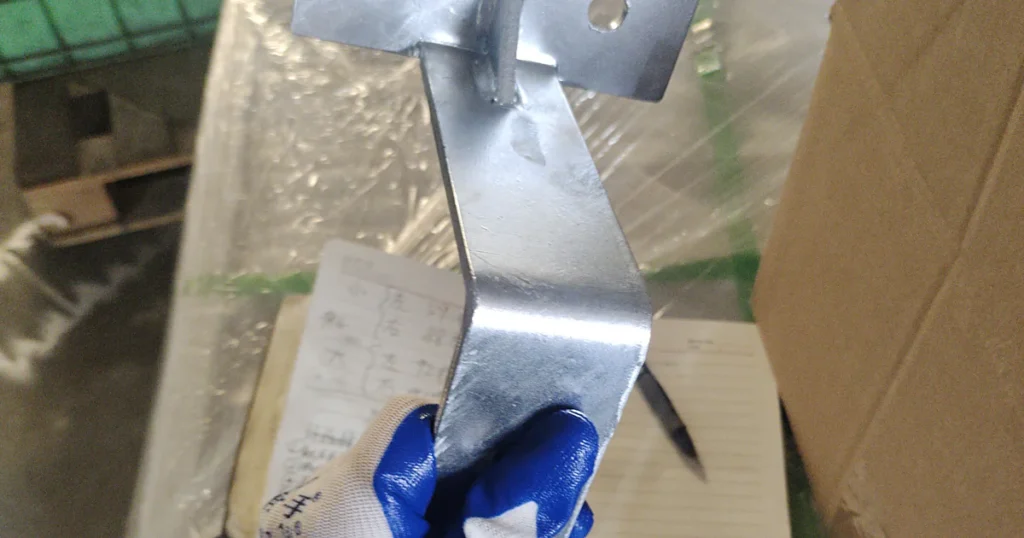
Galvanizing puts a much thicker zinc layer on the steel and is the standard answer for outdoor or humid service — yard trolleys, washdown areas, coastal sites, and any application where a scratched coating would otherwise rust quickly. The coating protects by sacrificing itself, so cut edges and small scratches are far less critical than with paint.
The trade-offs are real and need to be designed around:
- Threaded and mating parts. Coating thickness changes fit. Holes, threads, sliding surfaces and bearing seats need reviewing, and are often masked or machined after coating.
- Moving assemblies. Foldable cage trolleys, hinges, drop sides and latches accumulate coating in the joint. Clearances have to be designed for it.
- Appearance. Galvanized finish is functional and uneven compared with powder coat, and colours cannot be matched.
- Distortion risk. The bath is hot. Thin sheet assemblies and long welded frames need to be assessed before galvanizing.
A duplex approach — galvanize, then powder coat — is used where both corrosion life and appearance matter. It costs more and needs the right specification, but it is often the right answer for equipment that works outdoors and is seen by customers.
Stainless steel
Stainless steel is specified where cleaning is aggressive, where contamination cannot be tolerated, or where the trolley is in contact with food, chemicals or pharmaceutical material. It is also chosen for clean-area utility carts, kitchens, laboratories and any environment where rust staining is unacceptable.
Points to settle before quoting:
- Grade. 304 is the common choice for general clean and food-contact use; 316 is used where chlorides, salt or aggressive cleaning agents are present. Grade choice should follow the cleaning chemicals, not habit.
- Surface finish. Brushed, polished or bead-blasted finishes behave differently under scratching and cleaning.
- Weld quality and post-weld treatment. Stainless welds must be cleaned and passivated correctly, otherwise corrosion appears at the heat-affected zone — the classic failure on stainless trolleys.
- Galvanic contact. Stainless in contact with carbon steel or aluminium components needs thought, particularly in wet environments.
Stainless carries a significant cost premium over coated carbon steel. It is worth it when the service justifies it, and poor value when it does not — a well-prepared powder coated frame in a dry warehouse will usually outlast a poorly specified stainless one.
Anodizing and aluminium
Anodizing applies to aluminium parts, not to steel. It improves corrosion resistance and wear resistance while keeping a metallic appearance, and it can be dyed. On trolleys it is used for aluminium components such as extrusions, trim, name plates and light-duty assemblies where weight matters. It is thin, it will not hide surface damage, and it is not appropriate for the welded steel structure of a heavy trolley.
Where finishes actually fail on trolleys
The same failure points come up again and again, and most are design issues rather than coating issues:
- Inside hollow sections. Unsealed tube ends draw moisture in and rust from the inside out. Cap or seal them.
- Lap joints and crevices. Overlapping plates trap water and cleaning fluid. Design drain paths and avoid blind crevices where possible.
- The underside and the caster area. Out of sight, wet, and constantly hit. These need the same specification as the visible surfaces.
- Sharp edges. Coating pulls back from a sharp edge. Break edges before coating.
- Mixed metals. Dissimilar metals in contact create galvanic corrosion in wet service.
Frequently asked questions
Powder coating or galvanizing for a trolley used outdoors?
Galvanizing, generally. If appearance also matters, specify a duplex system. Powder coat alone outdoors works for a while, but every chip becomes a rust point, and a trolley gets chipped.
Can the finish be matched on a repeat order?
Yes, if the colour reference and process were recorded on the first drawing. Without that reference, matching is guesswork — which is why we fix the code before the first production run.
Is stainless always better for washdown areas?
Not always. If the cleaning agent is mild and the trolley is dried after use, a well-specified coated or galvanized frame can last well. If the cleaning is hot, frequent, or uses chlorinated agents, stainless is usually the safer investment.
What needs masking before coating?
Threads, mating faces, earthing points, bearing seats, brake contact surfaces and any area with a dimensional fit. Tell the supplier which surfaces must stay uncoated, and mark them on the drawing.
RFQ notes
Tell the supplier whether the cart is used indoors, outdoors, in washdown areas, near chemicals, or in customer-facing environments. Include the required colour reference, corrosion expectation, cleaning method and frequency, whether the finish must match previous orders, and how the trolley will be packed. Send the service description with your drawing and the finish will be specified alongside the frame rather than decided at the last minute.
Related pages: surface treatment, trolley products, and about Doing Metal.
Have a Similar Trolley Project? Send It for Review
Send your trolley type, load capacity, size, wheel requirement, quantity, and drawings or reference photos. Our team will review the structure and reply within 24 hours on business days.
Urgent project? Email gao@doingmetal.com or WhatsApp +86 18158549983.