September 22, 2026
Trolley Inspection Documents Compared | Doing Metal
Buyers often ask for “the inspection report” as if there were only one. On a custom trolley programme there are at least three documents that get called that name, and each answers a different question. Knowing which one you need – and when – saves money, avoids arguments, and tells you far more about the supplier than any certificate on a wall.
The three documents, and what each one does
First article inspection report
Produced on the first unit made with production tooling. It answers one question: does this cart match the drawing? Every critical dimension is measured and recorded, material and components are confirmed, and the finish is checked. It is the document that makes a first article approval meaningful rather than a formality.
Ask for it when the design is new, when a drawing has changed, or when you are qualifying a new supplier. It is not necessary on every repeat order of an unchanged product – and paying for it there is wasted budget.
In-process inspection records
Produced during production, at the points where a mistake becomes expensive: after welding, before surface treatment, and before packing. Typically these cover weld appearance, frame squareness, dimensional checks at critical points and coating condition.
Ask for these when the batch is large, when the programme repeats, or when a defect found after finishing would scrap the whole unit rather than be reworked.
Final or outgoing inspection report
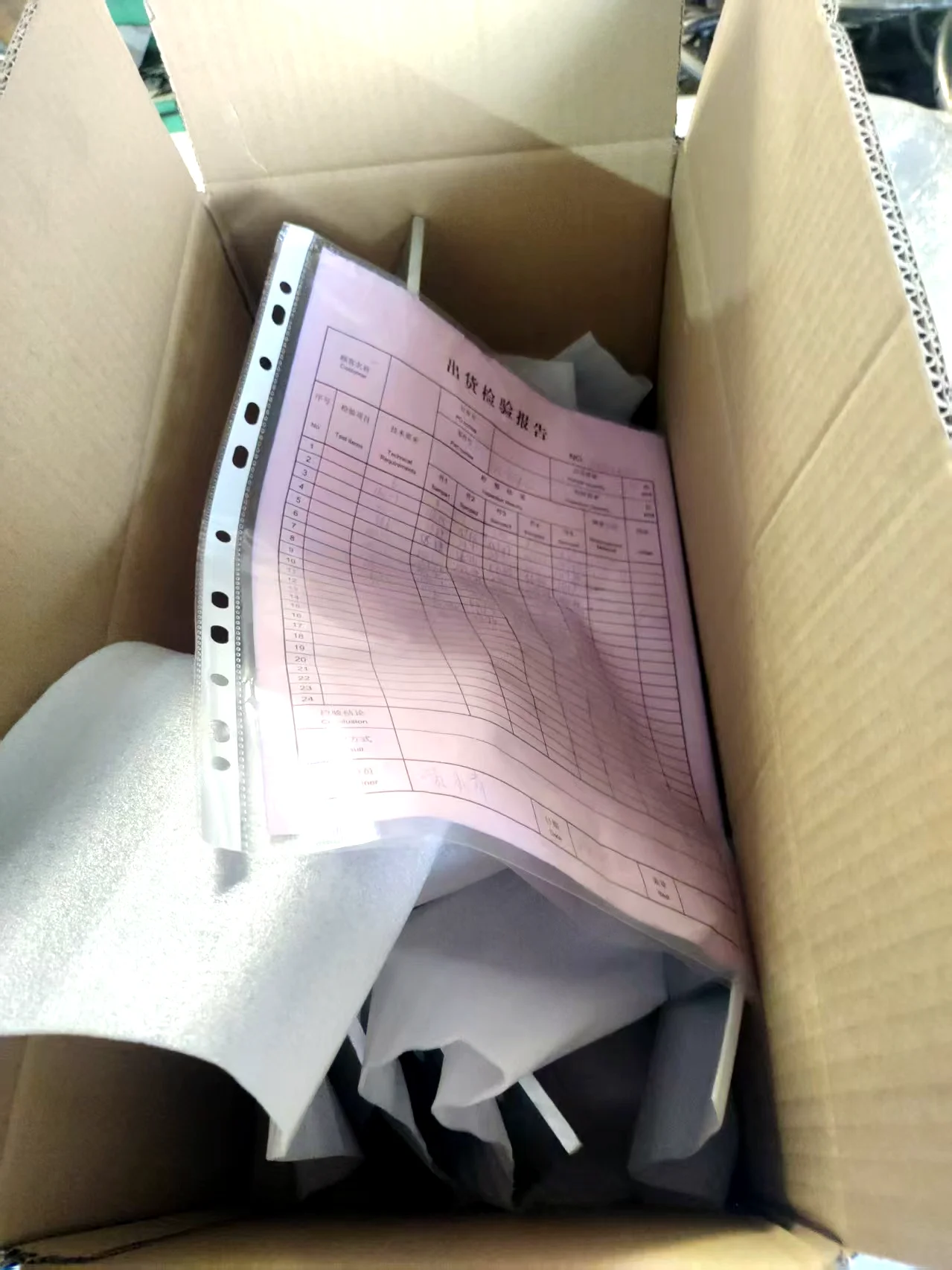
Produced against the finished shipment. It covers quantity, identification, function checks such as rolling and braking, packaging condition and any photographic record. It answers: is what is in the container what I ordered?
Ask for it on every shipment. It is the cheapest of the three and the one that matters most if there is ever a claim.
What a useful report actually contains
A report that says “inspected, OK” protects nobody. A useful one contains:
- The drawing number and revision it was checked against
- Measured values, not just pass or fail marks
- Tolerance applied to each measurement
- Identification of the measurement equipment used
- Material and component confirmation where it was part of the requirement
- Photographs of the unit, including any deviation noted
- Date, inspector, and a signature or equivalent record
Matching documentation to risk
Documentation should be proportional to what can go wrong. A simple shelf cart for a stockroom does not need the documentation package of a towed cart that carries a tonne down a public aisle. A sensible approach:
- Low risk, repeat product: final inspection report plus packing photographs
- New design or new supplier: first article report, then final report on each shipment
- Safety-critical or heavy load: first article, in-process weld or dimensional records, final report, plus material certificates
- Regulated environments: add the specific certificates your market requires, agreed at RFQ so they are quoted rather than added later
How to use the documents on arrival
The report is not paperwork to file, it is a receiving tool:
- Check the drawing revision on the report against the drawing you approved
- Spot check two or three of the stated measurements on a real unit
- Compare packing photographs with what you see when the container opens
- Note any deviation listed, and decide whether you accept it in writing
- Keep the report with the purchase order – it is your reference for the next order and for any claim
Questions worth asking before you order
- Which documents are included in the quoted price, and which cost extra?
- Which drawing revision will the report be written against?
- Are measured values recorded, or only pass and fail?
- Will photographs of the shipment be provided before it leaves?
- How are deviations reported – before shipment, or after you find them?
Our quality page describes the inspection gates used on trolley builds; the documentation package is agreed per project, in writing, before production starts.
Common documentation mistakes buyers make
Five that come up repeatedly, each avoidable at RFQ stage:
- Asking for everything on every order. A full documentation package on a simple repeat cart adds cost without reducing risk.
- Asking for nothing. The opposite error. Even a final inspection report is worth having on every shipment.
- Not stating the drawing revision. A report written against an old revision proves very little.
- Accepting pass or fail only. Measured values let you spot a trend before it becomes a failure.
- Discovering the requirement after production. Certificates sourced late cost more and delay the shipment.
How to write the requirement into your RFQ
One paragraph is enough. State the documents you require, the drawing revision they apply to, whether measured values must be recorded, and whether photographs are needed before shipment. Add what you do not need, so nobody has to guess. Written into the RFQ, documentation is quoted; added after the batch is built, it becomes a problem.
Frequently asked questions
Do we need a first article report for every repeat order?
Usually not. Once the drawing is stable and the supplier has produced it before, a final inspection report per shipment is normally enough. Re-run the first article whenever the drawing changes or production moves.
Can we specify our own inspection format?
Yes. Send your template during RFQ. Adopting a buyer format is easier during quotation than retrofitting it after the batch is built.
Are material certificates the same as an inspection report?
No. A certificate covers the material supplied, typically from the mill; an inspection report covers the product built. Both can be required, and they are separate line items.
Send your documentation requirements with the RFQ through the contact page and they will be quoted, not discovered later.
Have a Similar Trolley Project? Send It for Review
Send your trolley type, load capacity, size, wheel requirement, quantity, and drawings or reference photos. Our team will review the structure and reply within 24 hours on business days.
Urgent project? Email gao@doingmetal.com or WhatsApp +86 18158549983.