Skip to content

Welding Capability

Custom Metal Welding Fabrication for Trolley Frames and Assemblies

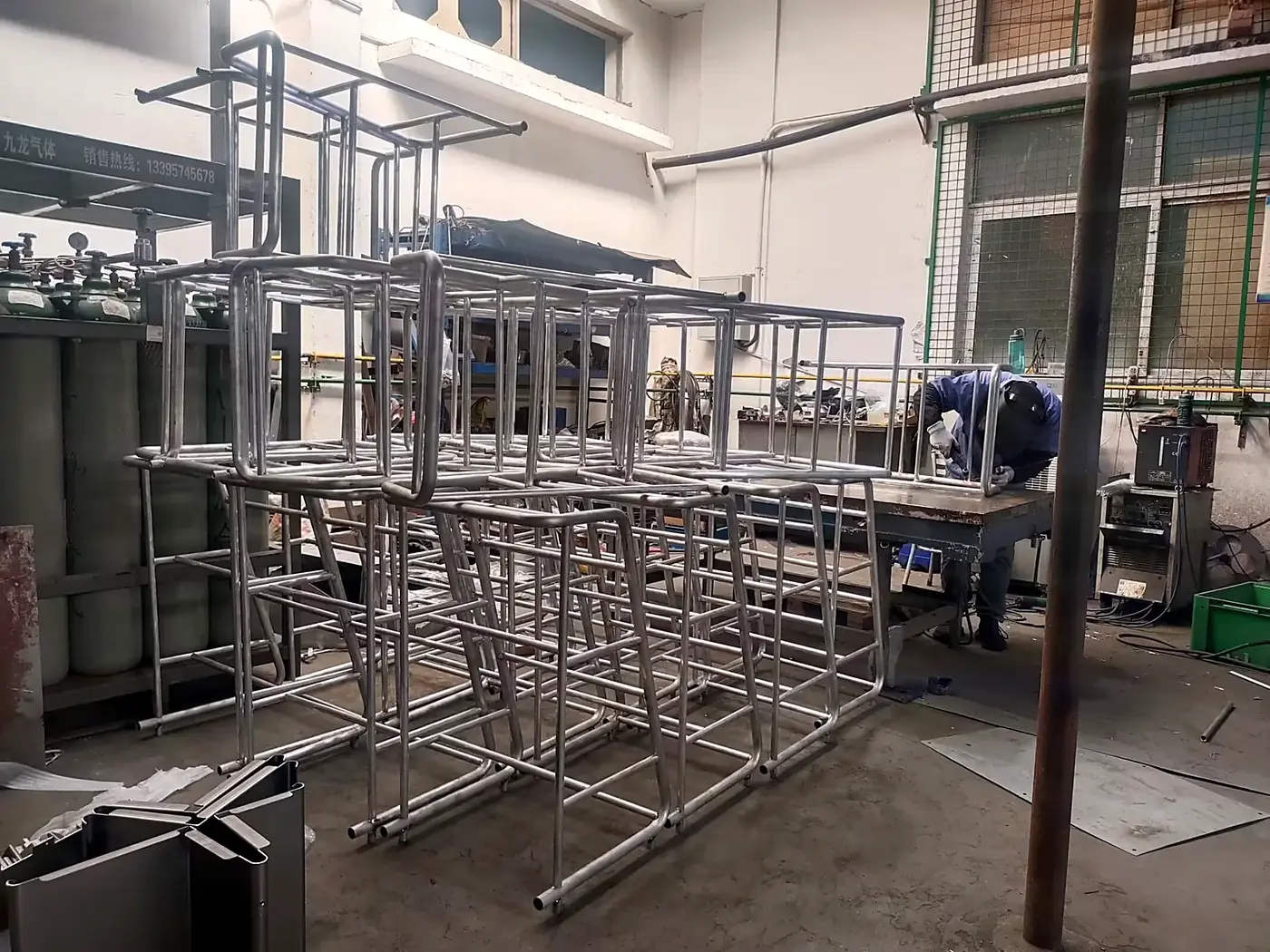
Welding controls the real strength and running quality of a trolley. Frame squareness, caster plate flatness, handle alignment, shelf supports, cage rigidity and visible weld finish all depend on the welding method and process control.

10 welding stations listed publicly TIG, MIG, spot and laser welding Carbon steel, stainless steel, aluminum Fixture and sequence control Frame squareness checks
Custom Metal Welding Fabrication for Trolley Frames and Assemblies

Engineering Context

A welded trolley must be square before it can run straight

A trolley frame is a moving welded structure. It sees pushing force, turning force, vibration, side impact and load changes. Even when the material is strong enough, poor welding sequence can pull the frame out of square, make caster plates uneven or create stress around shelves and handles.

DoingMetal public content lists TIG, MIG, spot welding, robotic welding and laser welding capability for carbon steel, stainless steel and aluminum. FuleiMetal public content also refers to welding stations and integrated fabrication. The correct method should be chosen by material, thickness, joint type, appearance requirement and production quantity.

For buyers, welding quality should be discussed in practical terms: does the trolley sit on all wheels, does it track straight, are the visible welds acceptable, are sharp edges removed, are reinforcement points placed where load enters the frame and can the same structure be repeated in future orders.

Capability Details

What Buyers Should Confirm

Item What to Confirm Why It Affects Quality
Welding Methods TIG, MIG, spot and laser welding can be reviewed according to the structure. Different methods balance appearance, heat input, penetration, speed and cost.
Materials Carbon steel, stainless steel and aluminum assemblies should be reviewed separately. Material affects filler choice, heat control, distortion risk and finish after welding.
Joint Design Tube-to-plate, tube-to-tube, sheet-to-frame, mesh-to-frame and bracket joints need different access and weld size. A strong drawing can still fail if the joint is hard to weld or inspect.
Fixtures Repeat trolley orders may require fixtures for frame, caster plates, shelves and handles. Fixtures improve repeatability, squareness and assembly speed.
Visible Welds Confirm which welds are customer-facing and whether grinding, brushing or polishing is required. Visible weld requirements change labor cost, finish quality and inspection criteria.

Process Know-How

How This Process Affects Trolley Performance

Where welding is used on trolleys

Welding is used for base frames, push handles, shelf supports, mesh cages, caster plates, side rails, equipment racks, tool cart bodies and reinforced corners. Heavy-duty trolleys may need local reinforcement around caster plates and load-transfer points rather than thicker material everywhere.

Distortion control

Heat input can shrink one side of a welded structure and pull it out of square. Balanced tack welding, controlled sequence, fixture support, short weld passes and cooling time help keep frames stable. Large flat panels and thin sheets need special attention because they show warping easily.

Inspection and finishing

For trolley projects, practical checks include diagonal measurement, caster plate flatness, handle symmetry, shelf level, weld bead consistency, cracks or undercut, grinding quality and sharp-edge removal. The finish plan should be confirmed before welding because powder coating, galvanizing or brushing can highlight different defects.

Inspection

Quality Control Points

First welded frame check before batch welding Diagonal and squareness measurement Caster plate flatness and hole alignment check Visual weld inspection for defects and sharp edges Fit-up test with shelves, wheels, handles and accessories

RFQ Preparation

Information That Helps Us Quote Accurately

For custom trolley projects, a clear RFQ helps us choose the right process, avoid overbuilding and identify quality risks before sample production.

Assembly drawing or photos of current structure Load capacity, load direction and route condition Material and tube/sheet thickness Visible weld expectations and grinding requirement Finish after welding and corrosion requirement Quantity and whether repeat-order fixtures are expected

Buyer FAQ

Common Process Questions

Which welding method is best for trolley frames?

There is no single best method. MIG is common for strong steel frames, TIG is useful for cleaner visible welds and stainless work, spot welding fits some sheet structures, and laser welding can reduce heat input for selected joints.

Why do caster plates need special attention?

Caster plates carry concentrated load and decide whether the trolley rolls correctly. They need flatness, hole alignment and enough reinforcement for the expected load.

Can welded frames be powder coated?

Yes. Weld spatter, sharp edges, oil and grinding marks should be controlled before pretreatment and coating. Poor weld finishing often becomes more visible after coating.

Do heavy-duty trolleys always need thicker tubes?

Not always. Load path, crossmembers, caster plate reinforcement, handle design and wheel choice can matter more than simply increasing every tube size.

Related Pages

Continue Reviewing the Manufacturing Route

Send Your Drawing for Welding Capability Review

Send your trolley type, load capacity, size, wheel requirement, quantity, and drawings or reference photos. Our team will review the structure and reply within 24 hours on business days.

Urgent project? Email gao@doingmetal.com or WhatsApp +86 18158549983.