2016
Ningbo Fulei Metal Products Co., Ltd. is presented publicly as founded in 2016.
 DoingMetal
Manufacturing Processes
A trolley is not only a welded frame with wheels. It is a chain of manufacturing decisions: material selection, laser cutting, bending, welding, surface finish, caster assembly, functional inspection and export packing. Each process affects whether the trolley runs straight, carries the load, protects the floor, resists corrosion and arrives without damage.
Factory Facts
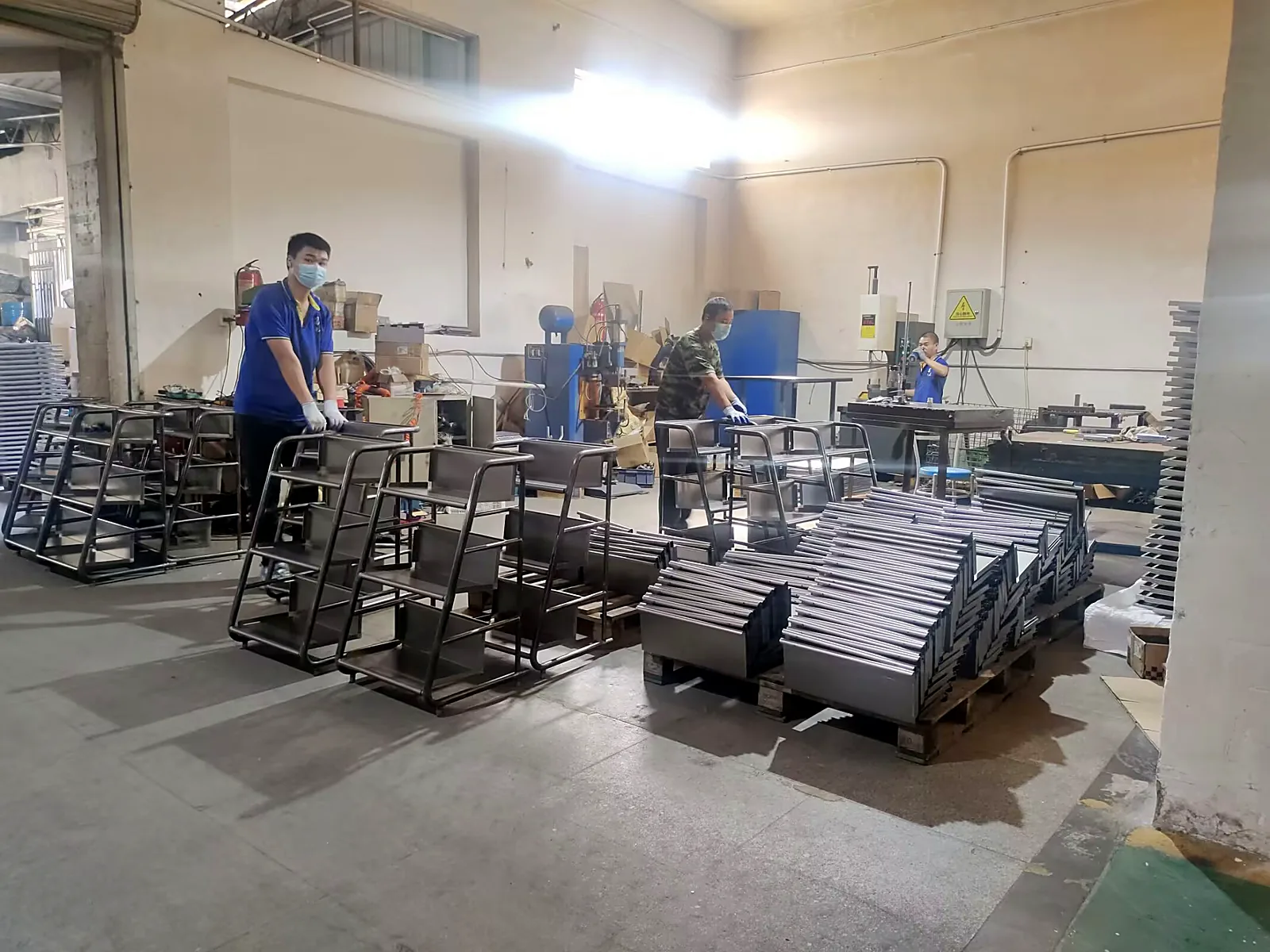
These points are based on public DoingMetal and FuleiMetal content and are written for trolley buyers who need evidence before supplier approval.
Ningbo Fulei Metal Products Co., Ltd. is presented publicly as founded in 2016.
Public pages mention TRUMPF laser cutting plus multiple laser cutting machines.
CNC press brakes support shelves, trays, formed channels and trolley panels.
Welding stations support frames, cages, handles, brackets and structural assemblies.
Process Pages
Each process page explains what the process does, which trolley parts it affects, what technical details should be confirmed, how quality is checked and what buyers should include in an RFQ.
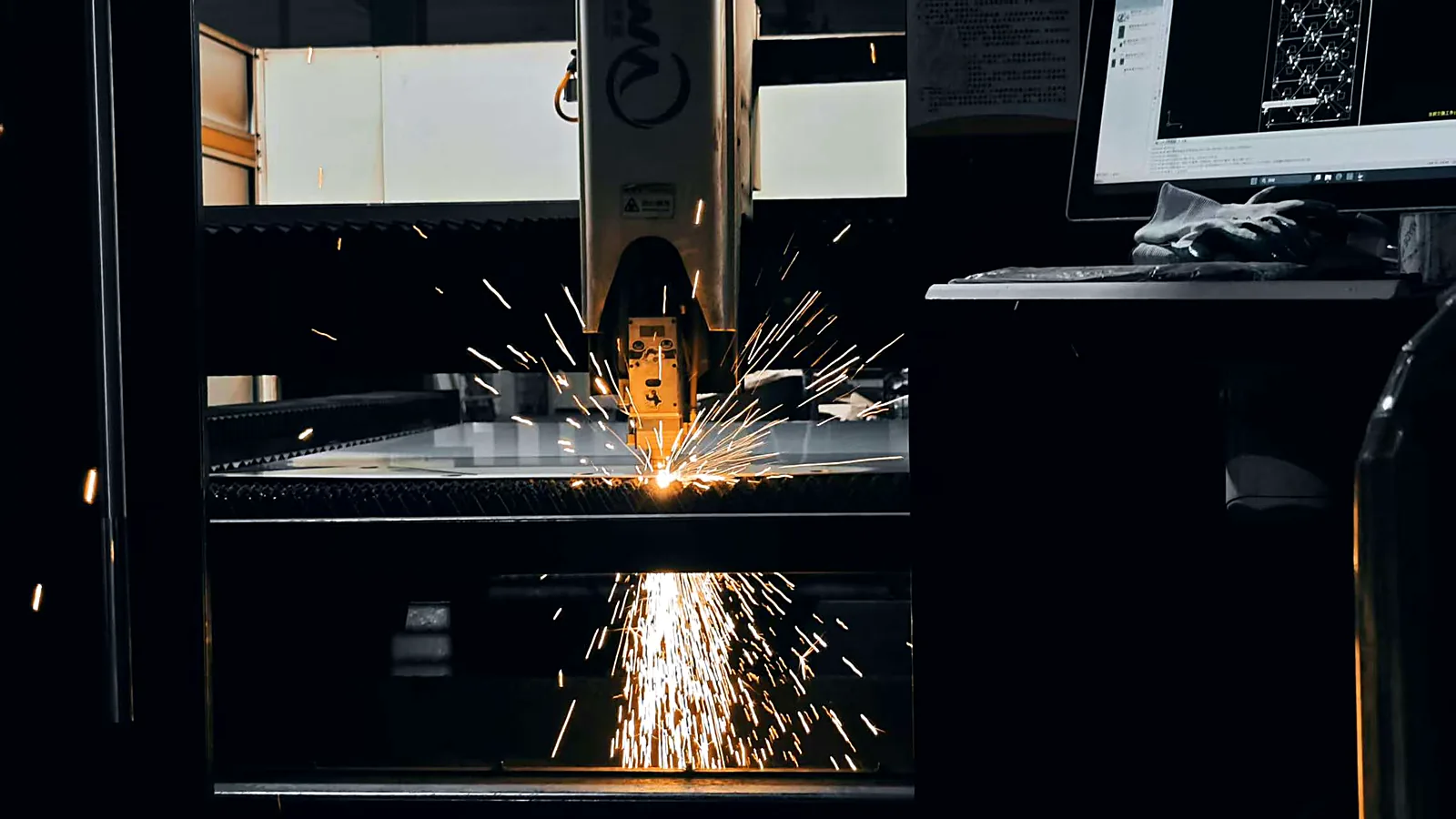
TRUMPF laser cutting and multiple laser systems for flat blanks, shelves, decks, caster plates, brackets and custom trolley components. The page explains materials, public thickness range, tolerance review, kerf, burr control and inspection points.
Read process details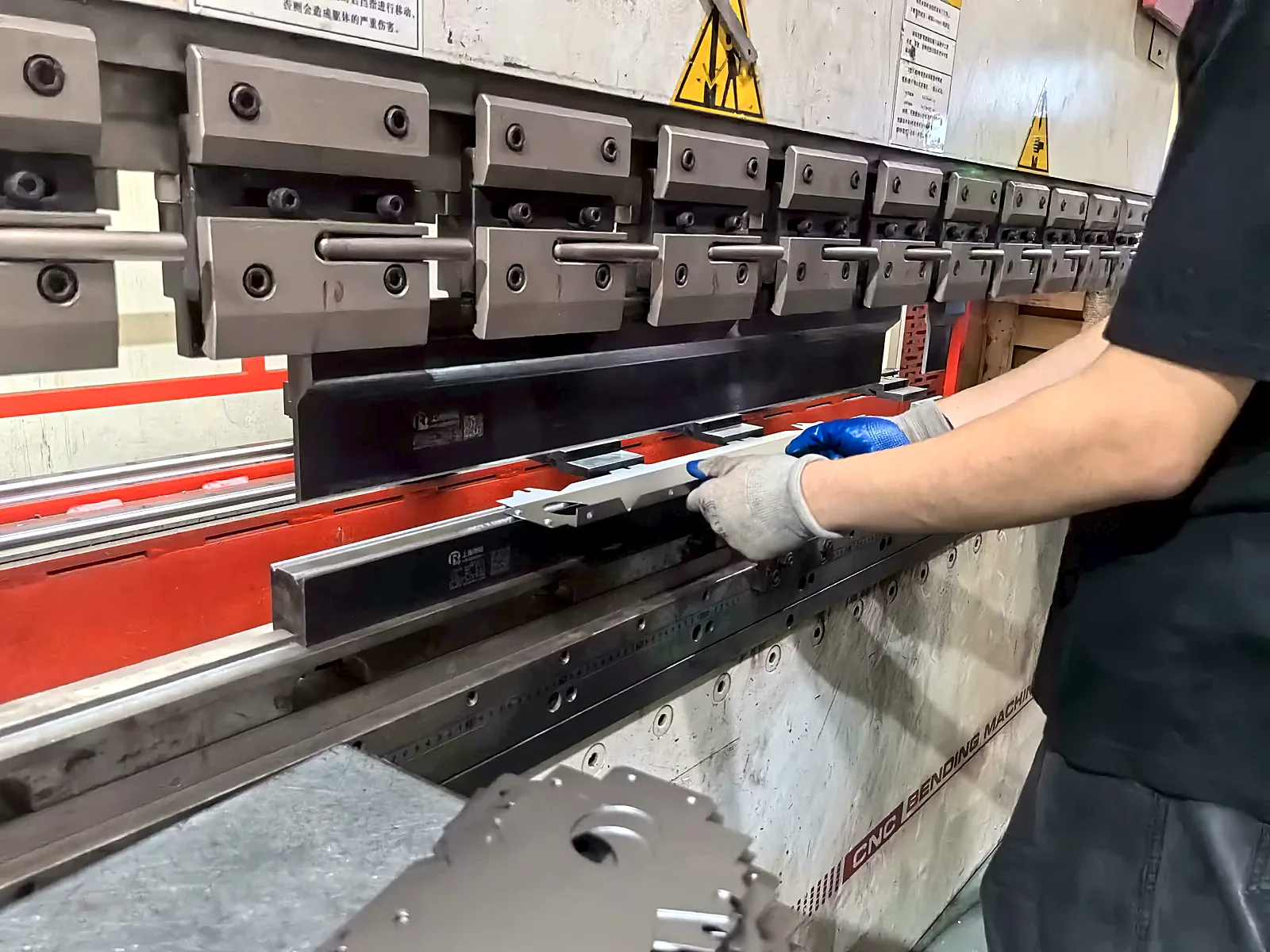
CNC press brake forming for trolley shelves, tray lips, drawer bodies, channels, guards and reinforcement parts. The page covers bend radius, springback, hole-to-bend distance, bend sequence and dimensional checking.
Read process details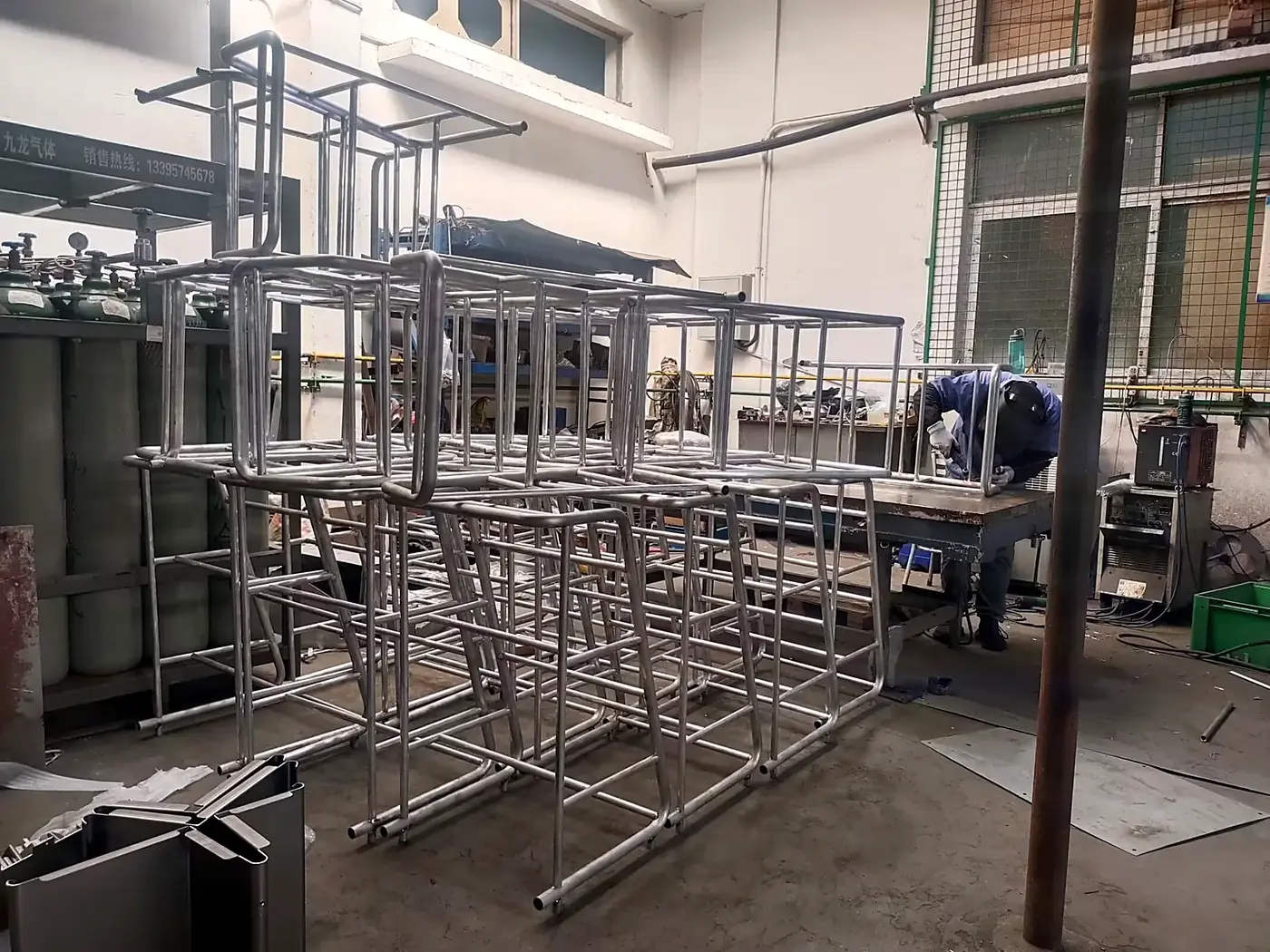
Welding method selection for trolley frames, handles, cage panels, caster plates and equipment racks. The page explains joint review, fixture control, weld sequence, distortion reduction and frame squareness checks.
Read process details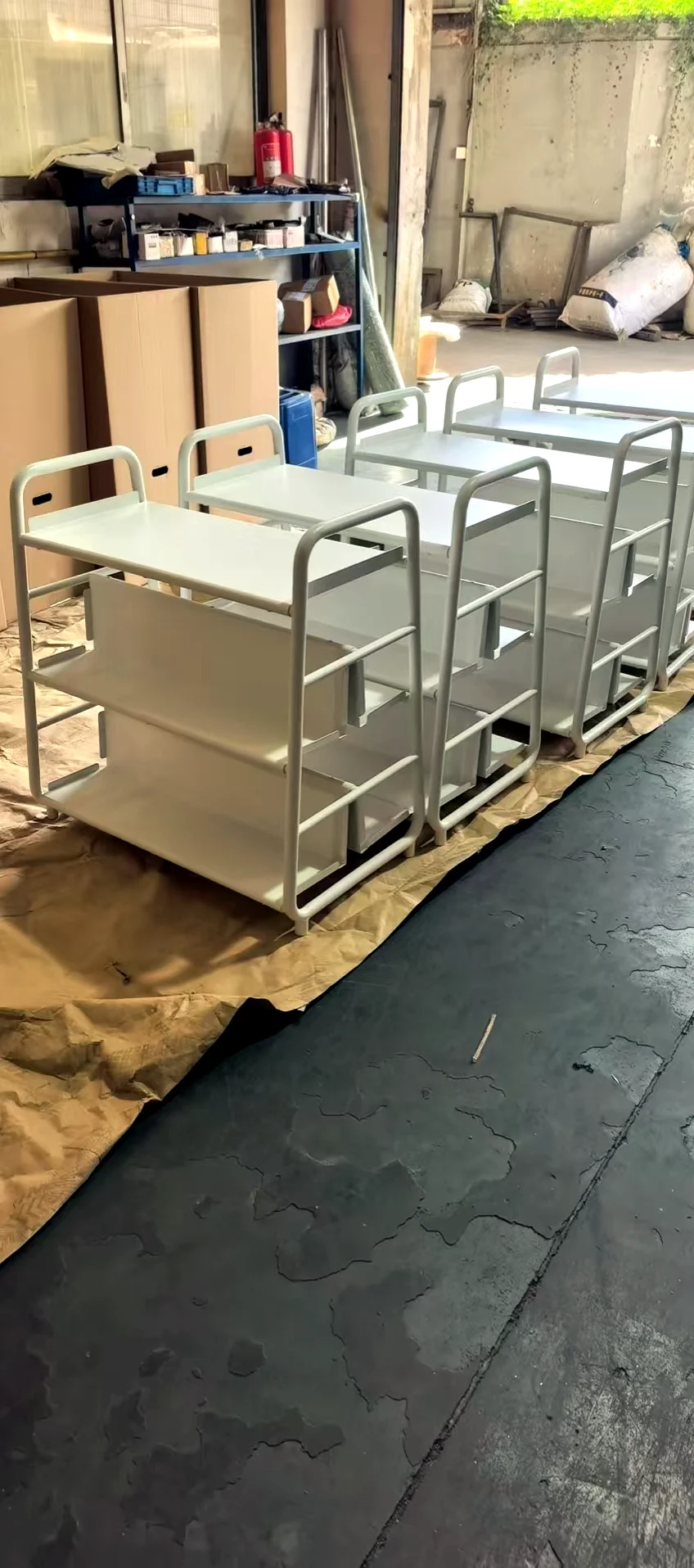
Powder coating, zinc plating, galvanizing, anodizing, brushing and polishing options for different trolley environments. The page helps buyers define corrosion, color, masking, salt-spray and packing requirements.
Read process details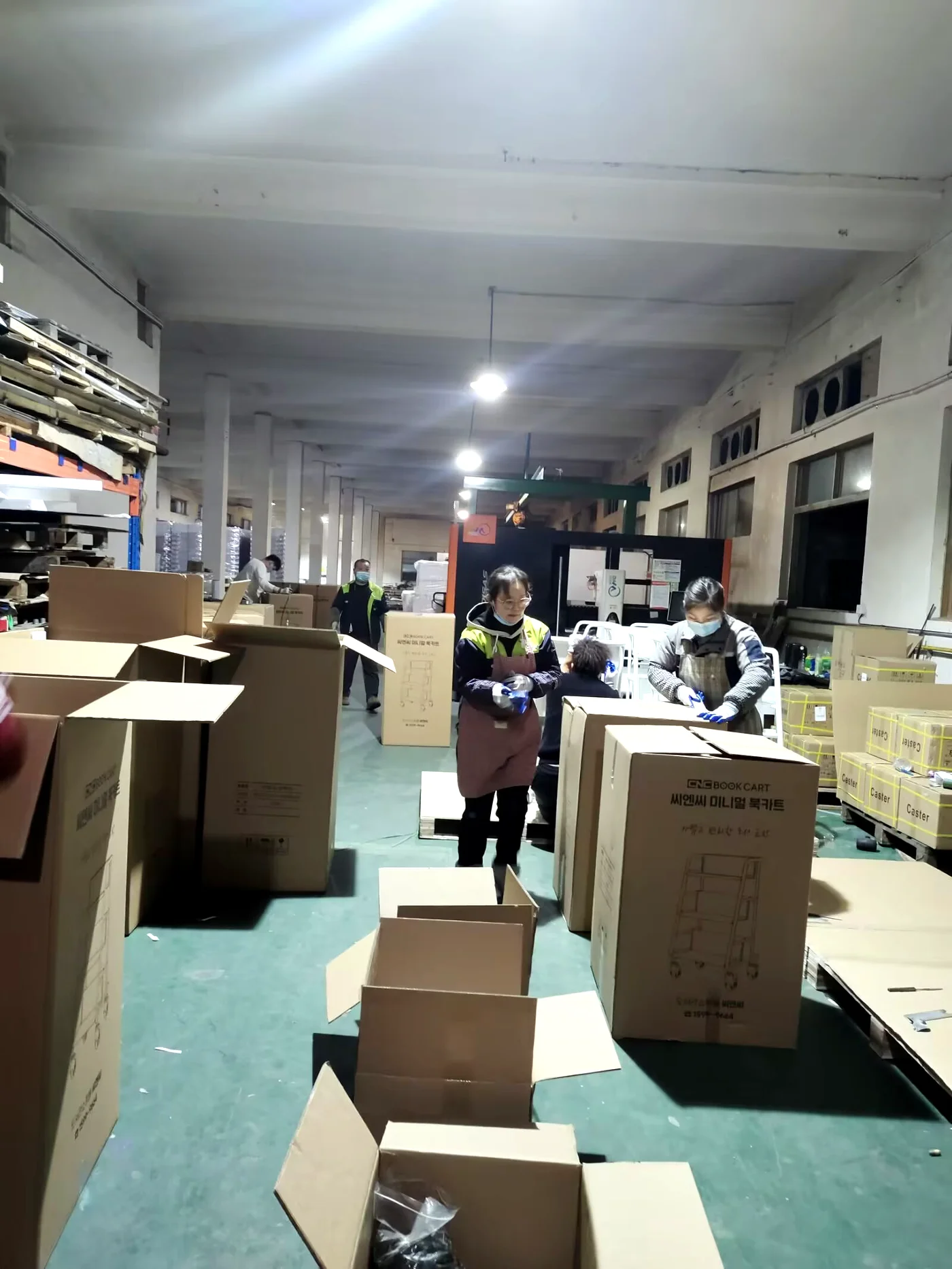
Caster installation, brakes, handles, drawers, shelves, accessories, labeling and export packing. The page explains how a fabricated trolley becomes a finished product ready for use or distributor assembly.
Read process details
Incoming material checks, first article inspection, in-process checks, weld and finish review, final rolling/brake tests, packing inspection and documentation options for overseas buyers.
Read process detailsWhy Process Depth Matters
When a buyer only asks for the cheapest trolley, important risks stay hidden: undersized caster plates, weak shelf lips, poor weld sequence, wrong wheel material, coating scratches, loose hardware, oversized cartons or no record for repeat orders. A professional process discussion reduces those risks before the first sample.
We check whether the trolley can be cut, bent, welded, coated, assembled and packed without unnecessary cost or quality risk. DFM questions are especially important for folded shelves, caster plates, cages, drawers and knock-down structures.
Each process has a control point: material and thickness check, first cut inspection, bend angle check, weld squareness review, finish inspection, rolling and brake test, and final packing verification.
The more clearly you define load, route, material, finish, wheel, packing and documentation needs, the more accurate the quotation becomes. Drawings are ideal, but photos and sketches can also start the review.
Process Reference
Use this table when reviewing a quotation or a first article. It maps each process to the trolley parts it affects, the parameter that should be confirmed, and the defect that shows up when it is not.
| Process | Parts It Controls | Parameter to Confirm | Common Defect When Ignored |
|---|---|---|---|
| Laser cutting | Blanks, decks, caster plates, brackets, mesh panels | Material and thickness, kerf, burr direction, critical hole positions | Parts that do not fit the jig, rough edges under coating |
| CNC bending | Shelves, tray lips, channels, guards, reinforcement | Bend radius, springback allowance, hole-to-bend distance, sequence | Cracked bends and shelves that will not sit flat |
| Welding | Frames, handles, cage panels, caster mounts | Joint design, weld sequence, fixture control, squareness | Distorted frames and caster plates that crack in service |
| Surface treatment | All visible and corrosion-exposed surfaces | Pretreatment, coating type and thickness, colour reference, masking | Rust from the edges and colour mismatch between batches |
| Assembly and QC | Casters, brakes, handles, drawers, shelves, labels | Torque, rolling and brake function, fit of moving parts | Loose hardware and carts that pull to one side |
| Inspection | Every stage above | Drawing revision, measured values, photographic record, packing check | Deviations discovered at destination instead of before shipment |
Send your trolley type, load capacity, size, wheel requirement, quantity, and drawings or reference photos. Our team will review the structure and reply within 24 hours on business days.
Urgent project? Email gao@doingmetal.com or WhatsApp +86 18158549983.