Book return area
Operational need: Returned books need quick sorting before reshelving.
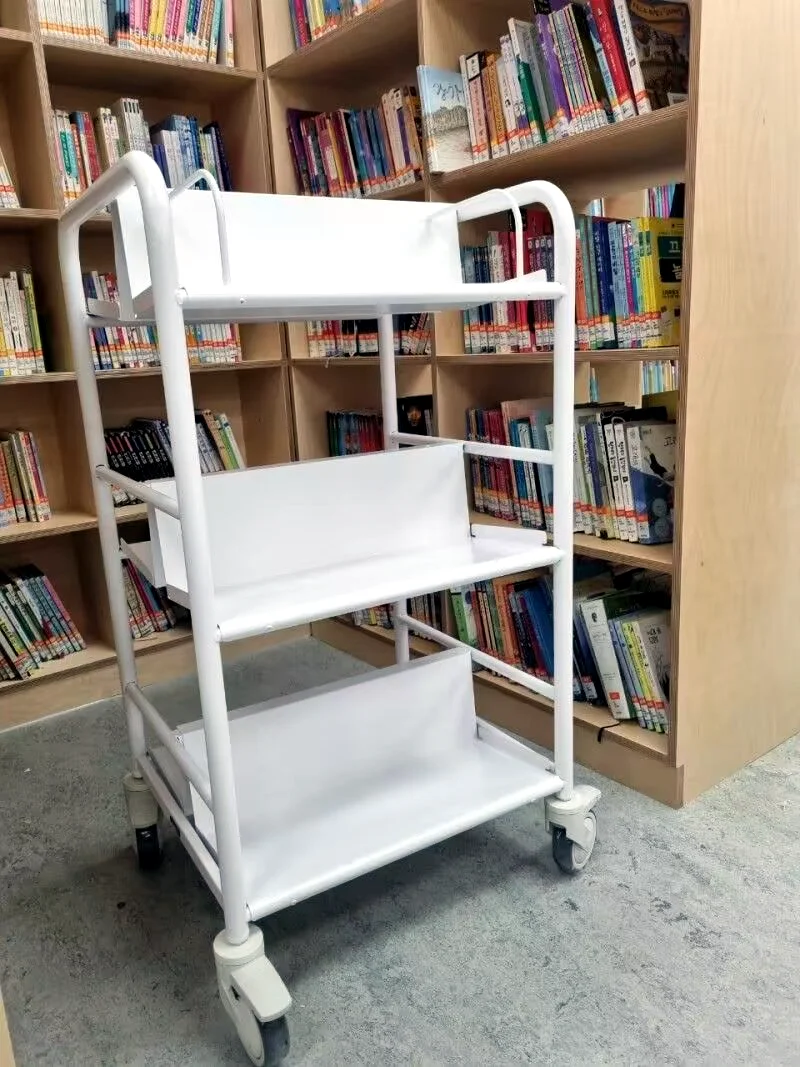
Trolley design: Use multi-shelf carts with visible shelf access, lips and quiet wheels.
 DoingMetal
Library & Education Trolleys
Library trolleys need quiet wheels, safe edges, stable shelves and a clean appearance. They are used for book returns, reshelving, classroom materials, archive boxes, office files and public-area movement where noise and safety matter as much as load capacity.
Application Thinking
In libraries and schools, the trolley moves through quiet areas, narrow aisles, elevators and public spaces. It must protect floors, avoid sharp edges, keep books stable and look appropriate beside shelves and reading tables.
The main design choices are shelf angle, shelf lip, single-sided or double-sided access, wheel softness, handle position, corner protection, finish color and total height. Custom sizing helps the cart match local aisle width and book capacity.
Workflow Map
Each application page is written from the buyer's working route first, then converted into a trolley structure and RFQ checklist.
Operational need: Returned books need quick sorting before reshelving.
Trolley design: Use multi-shelf carts with visible shelf access, lips and quiet wheels.
Operational need: Staff move through narrow aisles without disturbing readers.
Trolley design: Use compact carts with controlled turning radius and non-marking wheels.
Operational need: Boxes, folders and records must stay organized and stable.
Trolley design: Use deeper shelves, dividers or flat platforms based on archive box size.
Operational need: Books, tablets, folders and supplies move between rooms.
Trolley design: Use utility carts with safe edges, brakes and easy-clean finish.
Buyer Pain Points
Caster material and bearing quality affect noise. Soft, non-marking wheels are usually better for quiet indoor floors.
Shelf angle and front lips help keep books stable during turning and stopping.
Aisle width, turning space and elevator dimensions should set the trolley size.
Rounded corners, deburred sheet metal and smooth coating are important in schools and public libraries.
Color, handle finish, visible welds and coating quality affect whether the cart fits the public environment.
Books, files and boxes have different weight distribution. Shelf strength should be matched to real materials.
Recommended Structures
For daily book returns and reshelving. Shelf angle, lip height, handle side and wheel noise are the key details.
View related trolleyFor higher capacity and fast access from both sides where aisle width allows.
View related trolleyFor folders, boxes and records. Deeper shelves, dividers and flat storage areas can be customized.
View related trolleyFor classrooms, office supplies and shared materials. Brakes, safe edges and easy-clean finish are important.
View related trolleyEngineering Details
| Design point | What buyers should confirm |
|---|---|
| Shelf angle | Angled shelves improve book stability, while flat shelves suit boxes and mixed materials. |
| Wheel noise | Non-marking rubber or quiet PU wheels help reduce noise and protect indoor floors. |
| Safety edges | Deburring, rounded corners, covered fasteners and smooth coating are important for public-space use. |
| Overall size | Confirm aisle width, elevator size, shelf height and storage space before choosing length and height. |
| Finish color | Powder coating color can be matched to school, library or office interiors. |
| Capacity | Book weight per shelf and total cart weight should be estimated before final shelf design. |
Manufacturing Route
Doing Metal connects trolley design with sheet metal fabrication, tube work, welding, surface treatment, assembly and inspection.
Confirm public area, archive room, classroom or office use.
Decide shelf count, angle, lip, access direction and handle position.
Form shelves, side panels and brackets with attention to safe edges.
Fit quiet casters, brakes if needed, and check smooth turning.
Apply powder coating or stainless finish and protect surfaces for shipment.
RFQ Preparation
Send the details below together with drawings, sketches, photos, existing cart references or samples. The more real workflow information you provide, the more useful the quotation will be.
Buyer FAQ
Angled shelves are useful for books because they help prevent sliding. Flat shelves are better for boxes, files or mixed supplies.
Yes. Wheel material, bearing quality, wheel diameter and frame vibration all affect noise. Non-marking rubber or quiet PU wheels are common choices.
Powder coating can be specified by color, texture and gloss level. Buyers can share a RAL color or reference sample.
Safe edges, stable shelves, easy movement, brakes where needed, durable finish and dimensions that suit classrooms or corridors.
Related Capability Pages
Send your trolley type, load capacity, size, wheel requirement, quantity, and drawings or reference photos. Our team will review the structure and reply within 24 hours on business days.
Urgent project? Email gao@doingmetal.com or WhatsApp +86 18158549983.