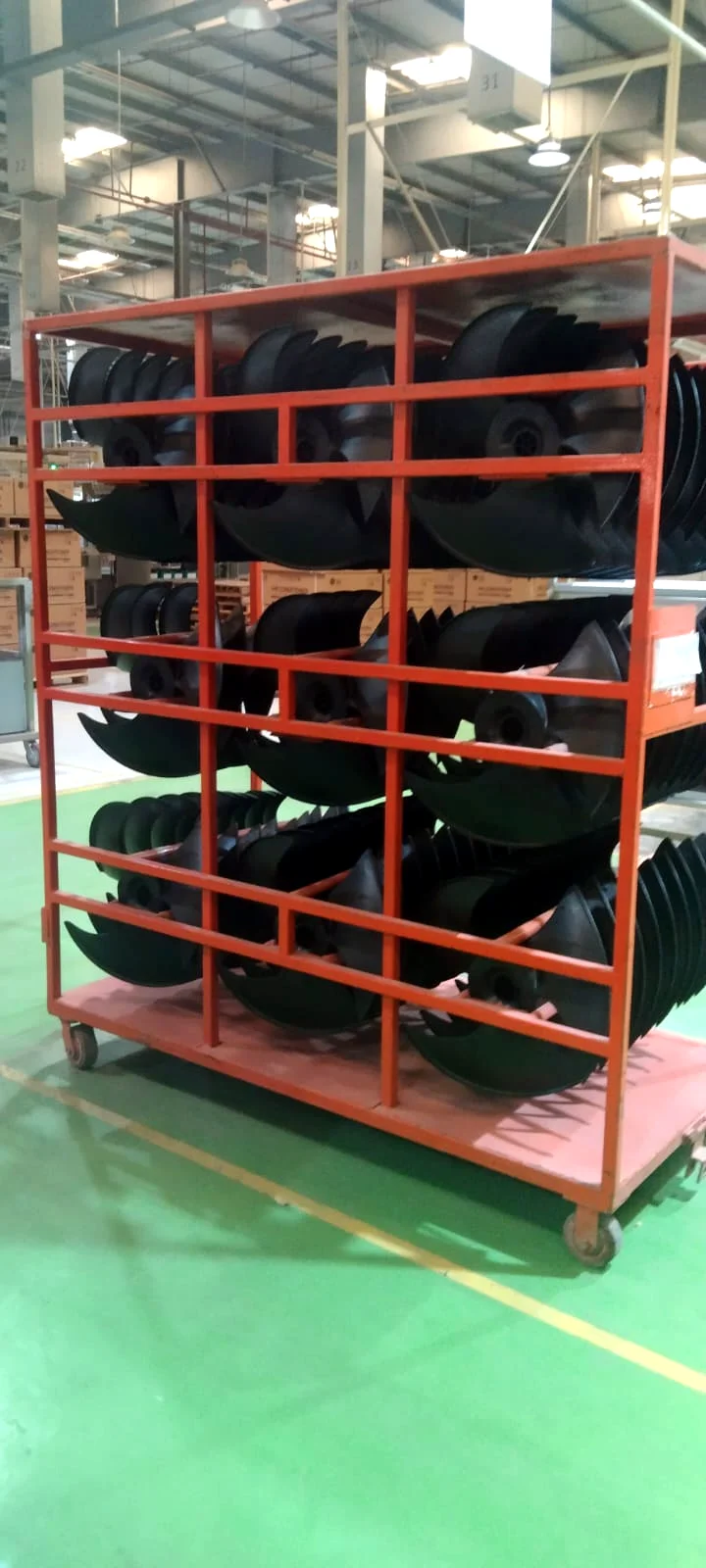
Warehouse Material Handling Carts for Picking and Internal Logistics
For warehouses, e-commerce fulfillment, distribution centers, stockrooms, packing stations and loading areas, the right trolley is not just a cart. It is a moving workstation designed around carton size, aisle width, picking route, floor condition, load weight and operator safety.
Order pickingStock replenishmentPacking station transferCage and parcel movementDistribution center workflow
A warehouse trolley should be designed from the route, not from a catalog photo.
In real warehouse work, the same trolley may pass through receiving, put-away, order picking, packing, staging and dispatch. Each zone has different constraints: narrow aisles, shelf height, turning radius, carton mix, floor joints, ramps, noise limits, brake needs and storage space after use.
Doing Metal builds custom metal trolleys around these constraints. Buyers can specify platform size, shelf spacing, mesh cage height, wheel diameter, caster layout, handle position, brake type, surface finish, logo color and packing method. The goal is to reduce repeated hand-carry trips, protect goods, make picking faster and keep the trolley stable during daily use.
Workflow Map
Where warehouse trolleys are used in the operation
Each application page is written from the buyer's working route first, then converted into a trolley structure and RFQ checklist.
Receiving and unloading
Operational need: Goods arrive in mixed cartons, totes or components and must move from the dock to sorting, inspection or temporary storage.
Trolley design: Use platform trolleys or cage trolleys with reinforced decks, clear load labels, brake casters and side protection if cartons can slide during movement.
Order picking routes
Operational need: Pickers need to collect many SKUs in one trip while keeping orders separated and easy to check.
Trolley design: Use shelf picking carts, tote carts or divided warehouse trolleys with shelf pitch based on bin height, label holders, document clips and smooth wheels for long walking routes.
Stock replenishment
Operational need: Staff refill shelves from backstock without blocking customer or warehouse aisles.
Trolley design: Use compact shelf carts, platform carts with handles, optional step or ladder interface, and quiet non-marking wheels when the route is close to retail or office areas.
Packing and kitting areas
Operational need: Finished orders, kits, labels, packaging materials and tools need to stay together beside the bench.
Trolley design: Use multi-level utility carts, drawer carts or work trolleys with tray edges, dividers, bins, barcode scanner holders and lockable storage where needed.
Dispatch and staging
Operational need: Orders wait before loading, often with loose parcels or mixed cartons that should not fall or be misplaced.
Trolley design: Use roll cage trolleys, mesh carts, parcel cages or heavy-duty platform trolleys with removable sides, tow bars or forklift pockets when required.
Buyer Pain Points
Problems buyers usually want to solve
Too many hand-carry trips
When cartons, totes or components are carried by hand, workers lose time walking back and forth. The trolley should hold the right number of items per trip without becoming too wide for the aisle or too heavy to push.
Forklifts are too large for short routes
Forklifts are efficient for pallets, but not always for order picking, kitting, small cartons, packing stations or mezzanine areas. Manual trolleys fill the gap between hand carrying and forklift movement.
Standard carts do not fit the aisle
A few centimeters can decide whether a cart turns smoothly at aisle ends. Overall width, handle overhang, wheel position and turning radius should be checked against shelf spacing and real route drawings.
Poor wheels create daily frustration
Caster choice affects pushing force, noise, floor protection, turning control, brake safety and maintenance. PU, rubber, nylon or pneumatic wheels should be selected from floor condition and load, not only price.
Loose goods need containment
Parcels, small boxes and mixed stock can fall from an open platform. Side rails, removable panels, wire mesh, doors, shelves, liners or dividers help keep goods visible and contained.
The cart is hard to pack or store
Export buyers often need knock-down packing, stackable units, foldable handles or nestable frames. These requirements should be designed before welding and coating, not after sample approval.
Recommended Structures
Recommended trolley structures for warehouse work
Heavy-duty platform trolley
Best for cartons, totes, tools, packed products and bulky loads. Important details include deck thickness, tube frame size, crossmember spacing, caster plate reinforcement, handle height and edge protection.
Best for order picking, replenishment, packing benches and stockroom movement. Shelf count, shelf pitch, tray lip, divider position and label area should match the SKU mix and picking method.
Best for loose parcels, mixed goods, retail backroom movement and staging. Mesh size, door direction, lock style, foldability and nesting design are the key RFQ points.
Best for tape, labels, tools, scanners, spare parts and packaging materials. Drawers, hooks, bins, side rails and lockable sections make the cart useful as a moving workstation.
Design details that should be confirmed before quotation
Design point
What buyers should confirm
Load and frame
Target load per trip, maximum load, load distribution, whether the load is static or moved over long routes, and whether crossmembers or thicker caster plates are needed.
Platform or shelf size
Carton size, tote size, usable deck size, shelf spacing, shelf lip height, number of layers, and whether the trolley must pass through narrow aisles or doors.
Caster layout
Two fixed plus two swivel for directional control, four swivel for tight turning, brake casters for loading zones, or special layout for long straight routes.
Wheel material
PU for smooth indoor floors, rubber for quieter movement and floor protection, nylon for harder surfaces and higher loads, pneumatic wheels for rougher ground.
Protection and containment
Side rails, mesh panels, removable gates, corner bumpers, anti-slip deck, rubber mat, shelf dividers or bin holders based on the goods being moved.
Finish and packing
Powder coating color, zinc plating, galvanizing, stainless steel, logo plate, carton packing, pallet packing, knock-down design or container loading target.
Manufacturing Route
How Doing Metal turns the requirement into a manufacturable trolley
Doing Metal connects trolley design with sheet metal fabrication, tube work, welding, surface treatment, assembly and inspection.
1
Workflow review
We start from cargo type, route, aisle width, floor condition, target load, storage requirement and expected quantity. Photos, sketches or existing cart references are useful at this stage.
2
Structure proposal
Frame, deck, shelf, cage, handle, wheel, brake and packing structure are selected according to the actual warehouse task. The aim is to avoid overbuilding while keeping enough safety margin for daily use.
3
Laser cutting and bending
Decks, plates, brackets, shelf parts and guard panels can be cut and formed before welding. Hole positions, slots and bend lines need to match caster and assembly interfaces.
4
Welding and fit-up
Welded frames are checked for squareness, caster plate flatness, handle alignment and shelf fit. Repeat orders can use fixtures when the structure is confirmed.
5
Surface treatment and packing
Powder coating, galvanizing, zinc plating or stainless steel are chosen from indoor/outdoor use, corrosion exposure and appearance needs. Packing is reviewed for export shipping and easy assembly.
RFQ Preparation
Send these details for a faster warehouse trolley quote
Send the details below together with drawings, sketches, photos, existing cart references or samples. The more real workflow information you provide, the more useful the quotation will be.
Main use: picking, replenishment, packing, staging, storage or dispatchCargo type, carton/tote/bin size and estimated load per tripOverall size limit: aisle width, door width, elevator size or truck spacePreferred trolley type: platform, shelf, cage, utility or custom fixture cartCaster requirement: wheel material, diameter, brake, fixed/swivel layout and floor conditionFinish requirement: powder coating RAL color, zinc plating, galvanizing or stainless steelPacking requirement: assembled, knock-down, pallet quantity or container loading targetDrawings, sketches, photos of current cart, warehouse route photos or product samples if available
Buyer FAQ
Questions Buyers Usually Ask Before Customizing This Trolley
Can one warehouse trolley design cover both picking and restocking?
Sometimes yes, but the design should be checked carefully. Picking carts usually need order separation, labels and efficient access; restocking carts may need stronger shelves, a push handle or step access. If both tasks share the same route and load, a combined design may work.
How do we choose between a platform trolley and a cage trolley?
Choose a platform trolley when the load is bulky, boxed or easy to stack. Choose a cage trolley when goods are loose, mixed, high-stacked or need containment during movement and staging. Removable side panels can also create a hybrid solution.
What information is most important for caster selection?
Floor type, route distance, load per trip, noise requirement, ramps, thresholds, turning space and brake needs. Caster choice changes how the trolley feels in daily work, so it should be confirmed early.
Can the trolley be packed knock-down for export?
Yes, many trolley structures can be designed for knock-down packing, but this affects frame joints, bolts, assembly time, coating protection and carton size. Tell us the target packing method before sample design.
Related Capability Pages
Keep Reviewing Product Type, Process and Quality Before RFQ
Send Your Application Details for a Custom Trolley Quote
Send your trolley type, load capacity, size, wheel requirement, quantity, and drawings or reference photos. Our team will review the structure and reply within 24 hours on business days.