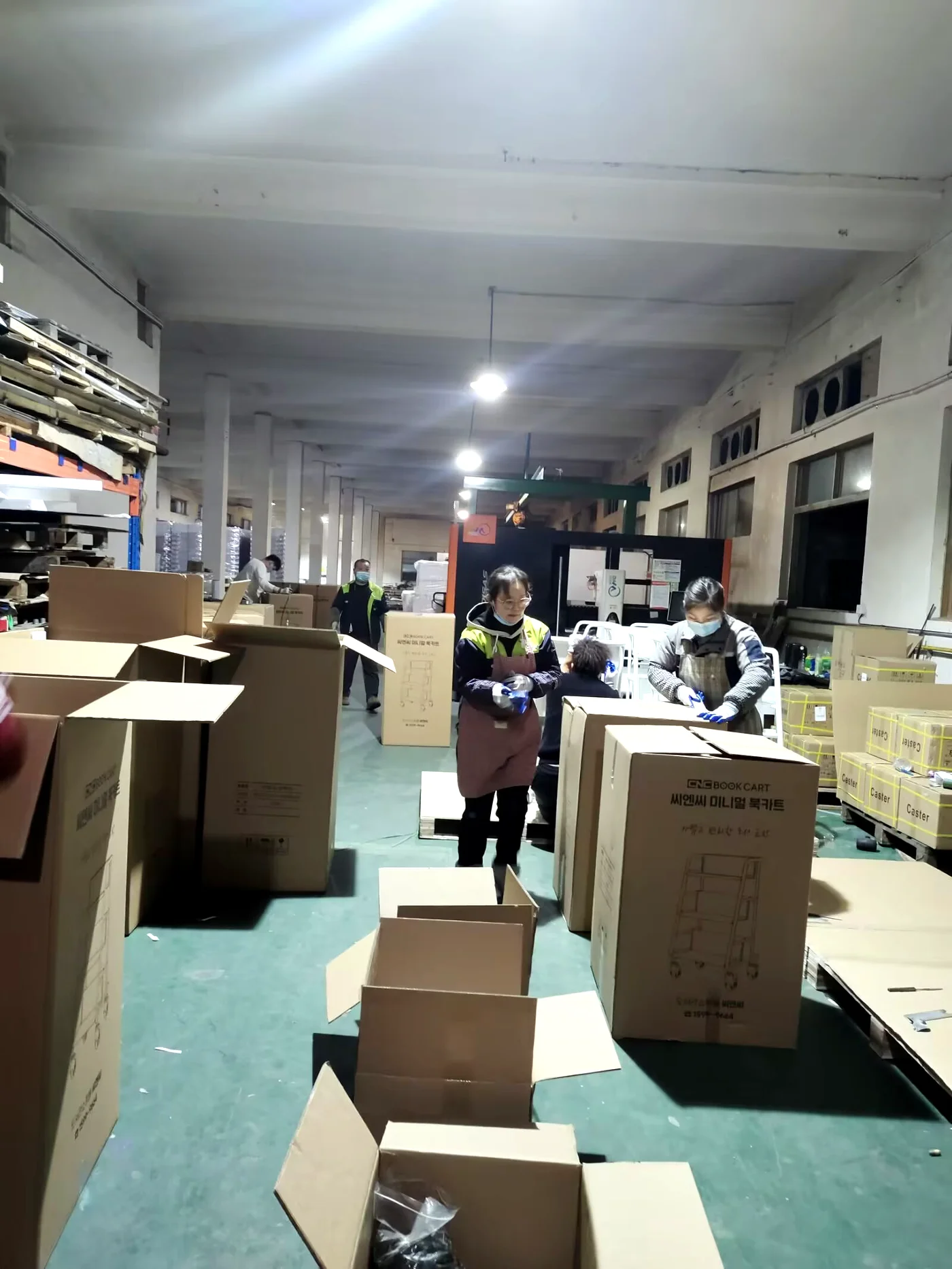
Many trolley problems appear late: wheels do not sit flat, brakes face the wrong side, shelves do not fit after coating, drawers bind, handles feel too low, bolts are hard to reach or packaging scratches the finish. A good assembly plan catches these problems before shipment.
DoingMetal public content refers to hardware insertion, mechanical fastening, sub-assembly, functional testing and final product packaging. For trolley buyers, this means RFQs should define not only metal parts but also casters, brakes, handles, shelf layout, locks, labels, logo plates, spare parts and packing method.
Assembly is also a cost-control point. Fully assembled trolleys save buyer labor but increase shipping volume. Knock-down packing can reduce freight, but the structure must be designed with clear joints, fasteners, instructions and coating protection.