Skip to content

Surface Treatment Capability

Metal Finishing for Industrial Trolleys: Powder Coating, Plating and Galvanizing

Surface treatment decides how a trolley looks, resists corrosion, handles cleaning, protects users from rough edges and survives shipping. The right finish depends on material, environment, brand requirements and how the trolley will be used.

Metal finishing planned by application Powder coating for color and indoor protection Zinc plating and galvanizing for steel Anodizing, brushing and polishing options Masking, inspection and packing review
Metal Finishing for Industrial Trolleys: Powder Coating, Plating and Galvanizing

Engineering Context

Finish choice should follow the working environment

A trolley used in a dry warehouse does not need the same metal finishing treatment as a cart used outdoors, in a livestock building, near cleaning chemicals or inside a customer-facing library. Finish selection affects cost, corrosion resistance, appearance, scratch behavior, edge feel and maintenance.

DoingMetal public content lists powder coating, anodizing, zinc plating, sandblasting and brushing, while earlier site content also refers to electroplating, galvanizing and powder coating. For buyer confidence, each finish should be tied to a use case: indoor warehouse, humid storage, outdoor route, clean area, retail floor or rough industrial workshop.

Surface treatment must be planned before the drawing is final. Coating thickness can affect holes, hinges, folding joints and assembly clearance. Powder coating needs clean surfaces and pretreatment. Galvanizing needs drainage and venting considerations. Stainless brushed parts need consistent grain direction and weld finish planning.

Capability Details

What Buyers Should Confirm

Finish Best-Fit Use Buyer Notes
Powder Coating Carbon steel platform trolleys, warehouse carts, tool carts, retail carts and customer-facing colors. Confirm RAL color, gloss, texture, pretreatment, masking areas, logo requirement and packing protection.
Zinc Plating / Electroplating Hardware, brackets, fasteners and smaller steel components. Confirm corrosion expectation, plating thickness, appearance, post-treatment and whether parts touch moving interfaces.
Hot-Dip Galvanizing Outdoor or humid-use steel frames, guards and selected heavy structures. Confirm drainage holes, venting, coating build-up, appearance tolerance and fit after coating.
Anodizing Aluminum panels or lightweight trolley components. Confirm alloy, color, cosmetic standard, scratch expectation and dimensional impact.
Brushing / Polishing Stainless steel utility carts, clean indoor areas and visible panels. Confirm grain direction, weld polishing level, protective film and cleaning method.

Process Know-How

How This Process Affects Trolley Performance

Powder coating for trolley products

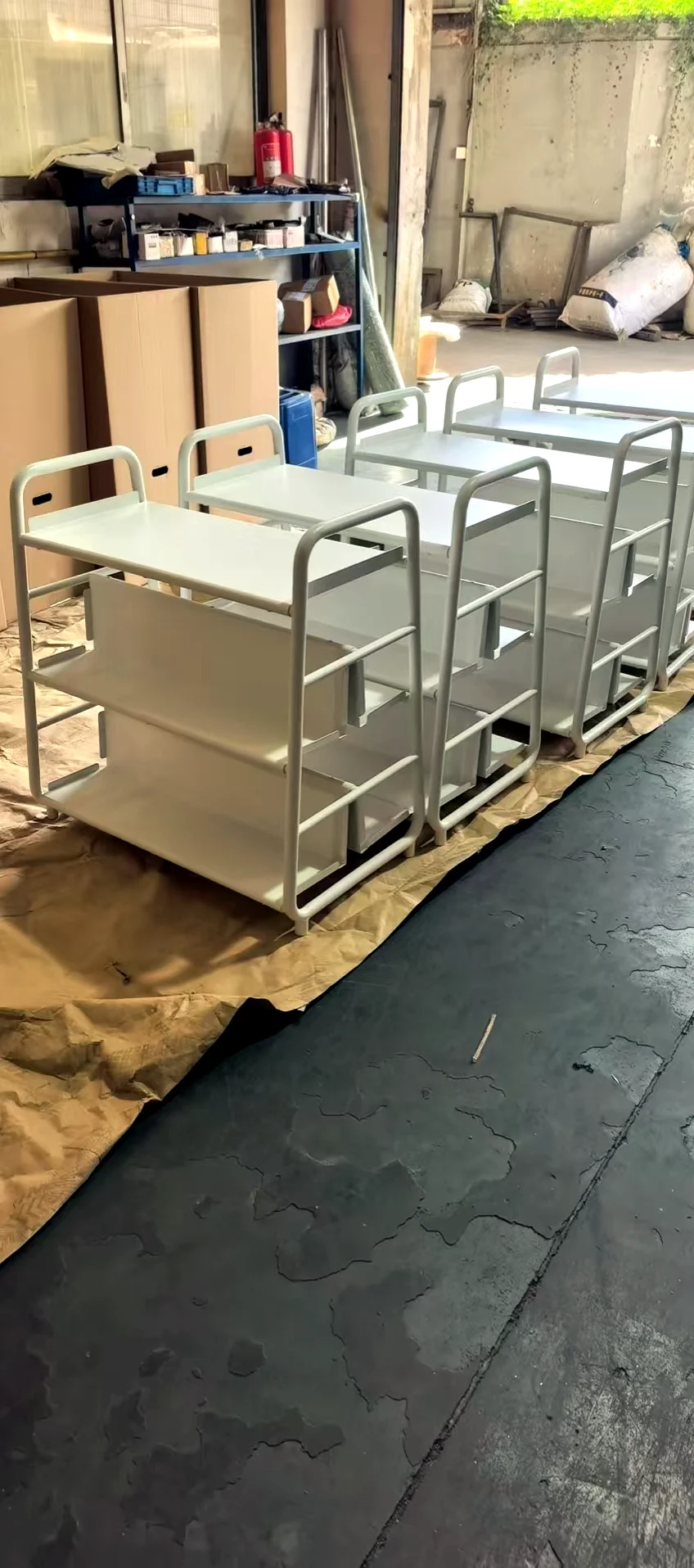
Powder coating is common for carbon steel trolleys because it gives a clean appearance and practical protection for indoor use. Buyers should define color, texture, acceptable orange peel, masking zones, hanging marks, scratch protection and whether parts are assembled before or after coating.

Galvanizing and plating for corrosion control

Zinc-based finishes help protect steel, but they are not only a checkbox. Threads, hinges, holes and mating surfaces can change after coating build-up. For cage carts, outdoor trolleys or humid environments, the design should consider drainage, venting and post-coating assembly clearance.

Finish inspection and packing

Finish quality should be checked before final assembly and packing. Important points include color match, coverage, scratches, exposed edges, coating chips around holes and protection between parts. Export packing should prevent metal-to-metal rubbing during container transport.

Inspection

Quality Control Points

Pretreatment and cleaning requirement confirmed before coating Color, gloss and texture sample confirmed when needed Masking of threads, bearing areas and assembly interfaces Scratch, chip, coverage and visible surface inspection Packing method reviewed to protect the finish during export shipment

RFQ Preparation

Information That Helps Us Quote Accurately

For custom trolley projects, a clear RFQ helps us choose the right process, avoid overbuilding and identify quality risks before sample production.

Indoor, outdoor, wet, chemical, clean area or public-space use Material grade and whether parts are steel, stainless steel or aluminum Required finish, RAL color, gloss and texture Salt-spray or corrosion expectation if required by buyer Masking zones, logo and visible surface standards Packing requirement to avoid scratches during shipment

Buyer FAQ

Common Process Questions

Is powder coating enough for outdoor trolleys?

It depends on exposure, pretreatment and coating system. Outdoor or humid use may require galvanizing, stainless steel or a stronger finish plan.

Why do holes or hinges become tight after coating?

Powder coating, plating and galvanizing add thickness. Tight holes, threaded areas and moving joints need masking or clearance review.

Can you match our brand color?

Yes, buyers can provide a RAL number or physical color sample. The final appearance should be approved by sample when color is important.

Which finish is best for libraries or retail areas?

Powder coating is often suitable because it supports clean colors and a smooth appearance. Quiet wheels, safe edges and scratch-resistant packing are also important.

Related Pages

Continue Reviewing the Manufacturing Route

Send Your Drawing for Surface Treatment Capability Review

Send your trolley type, load capacity, size, wheel requirement, quantity, and drawings or reference photos. Our team will review the structure and reply within 24 hours on business days.

Urgent project? Email gao@doingmetal.com or WhatsApp +86 18158549983.